 +91 9131509957
  info@rishikulyogshala.org




5 Excellent Health Benefits of Balancing Table Top Pose
At times, our most grounding experiences come from the simplest motion. Although the initial position of the balancing tabletop pose may seem calm, it creates an enormous amount of inner strength and clarity in your mind. The way Table-Top Pose has been defined and practiced encourages the user to become stable on their own merits. In this exploration, you will discover five excellent health benefits associated with tabletop yoga, including the enhancement of concentration and the restoration of both physical and emotional balance through its practice.
Balancing Table Top Pose
The Balancing Table Top Pose, known as Dandayamana Bharmasana in Sanskrit, falls under the category of restorative postures. The name is derived from the Sanskrit words danda (stick), yamana (balancing), bharma (table), and asana (pose). This posture mimics the form of a table and challenges your balance as you refine it. It’s a great starting point for those new to yoga, offering numerous benefits to help manage daily life stresses.
How to Do the Balancing Table Top Yoga Pose
- Start Position: Begin in a kneeling position.
- Hand Placement: Place both palms flat on the floor in front of you, aligning them under your shoulders.
- Body Lift: Lift your body to rest on your knees and palms.
- Spinal Alignment: Push your tailbone backward and your neck forward to stretch and lengthen your spine.
- Leg and Arm Raise: Inhale slowly and lift your right leg parallel to the ground. Then raise your left arm straight into the air.
- Balancing: Find your balance and maintain this position for one to two minutes, breathing calmly and focused.
- Return to Start: Lower your leg and arm back to the floor, returning to the kneeling position. Repeat with the other leg and arm.
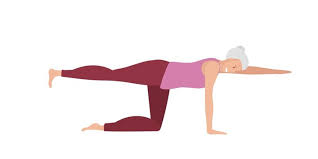
Table Pose Benefits :
- Helps in Creating Body Balance: The pose promotes physical balance through muscle coordination, achieving equilibrium physically and mentally.
- Strengthens the Core: Engages the core and abdominal muscles, providing a solid foundation for core workouts and strength building.
- Improves Posture: Alleviates back pain and postural issues by stretching the spine, supporting better posture, and reducing discomfort.
- Enhances Focus and Awareness: Requires mental concentration and breath awareness, refining mental capabilities and improving overall awareness and concentration.
- Establishes Harmony and Mindfulness: Balances physical and mental states, reducing anxiety and promoting positive mental health through mindfulness and stress relief.

Precautions and Contraindications Of the Table Top Pose
- Injury Considerations: Avoid the pose if you have recent knee or wrist injuries.
- Avoid Overarching: Do not bend or arch your torso excessively to prevent discomfort or injury.
- Pregnancy: Pregnant women should avoid this pose due to the challenge of maintaining balance.
- Neck Alignment: Keep your neck straight to avoid headaches.
- Support for Comfort: Use a soft blanket under the knee for additional support if needed.
- Practice Within Limits: Ensure that you only perform what is physically feasible to avoid injury and ensure a beneficial practice.
Read More: Best Yoga Asanas for Weight Loss
Conclusion
Balancing Table Top Pose is a simple yet effective yoga posture that builds core strength, improves balance, and enhances overall body coordination. By engaging the spine, shoulders, arms, and legs, this pose supports better posture while increasing stability and focus. Regular practice also encourages mindfulness, as maintaining balance requires controlled breathing and body awareness. Over time, Balancing Table Top Pose helps develop physical control, mental steadiness, and confidence on the mat, making it suitable for practitioners at all levels.
To gain the full benefits of this posture, correct alignment and proper technique are essential. These fundamentals are taught in detail during the 200 Hour Yoga Teacher Training in India at Rishikul Yogshala, where students learn traditional asana practice, alignment principles, and breath awareness. With guided learning and consistent practice, Balancing Table Top Pose can become an important part of a balanced and safe yoga routine.

Lead Teacher in Yoga Philosophy, Pranayama, Meditation, Kundalini and Therapeutic Applications of Yoga
Born into a traditional spiritual home, Krishna spent over a decade climbing the corporate ladder at Capgemini and Morgan Stanley worldwide; before quitting them to explore the purpose of life. He set forth on a spiritual quest, Learning and Experiencing Yoga with Great Yogis and Spiritual Masters of the Modern World. Krishna's teachings comprises of the ancient practices of yoga through modern scientific reasoning. He specializes in Yoga Philosophy, Pranayama, Meditation, Kundalini and Therapeutic Applications of Yoga. Connect with your true nature and experience the mystical dimensions of yoga in conversation with Krishna.
View Instagram Profile View Linkedin Profile

- How do YTTC, RYT and E-RYT Differ?

- Best Time to Join the Yoga Teacher Training Course in Goa

- Why is Goa The Perfect Destination For Yoga Teacher Training?

- What Are Healing Frequencies? Understanding the Power of Sound and Vibration

- Solar Plexus Chakra: What It Does, Where It Is, and How to Balance It?