 +91 9131509957
  info@rishikulyogshala.org




The Top 8 Health Benefits of Urdhva Dhanurasana
The splendid showcase of extreme physical flexibility and molding of the body into different art forms by professional contortionists surely leaves us open-eyed. Deep within all of us lies a contortionist waiting to be explored in its full glory.
Discover the inner performer in you on a holistic level. The science of yoga gives every individual an opportunity to delve into the practice of Urdhva Dhanurasana—an advanced backbend pose, an act of displaying orchestrated movements in synchronization with the breath for the upliftment of body, mind, and soul.
What is Urdhva Dhanurasana?
Urdhva Dhanurasana, commonly known as Wheel Yoga Pose or Upward-Facing Bow Pose, is a classic yoga backbend that forms a graceful arch with the body. In Sanskrit, Urdhva means “upward” and Dhanurasana means “bow,” reflecting the posture’s shape and energy. This pose stretches the chest, shoulders, and spine while strengthening the arms, legs, and core. Practicing it regularly can improve flexibility, open the heart, and boost overall vitality. It is an essential pose in many yoga routines and is often taught in foundational yoga teacher training programs.
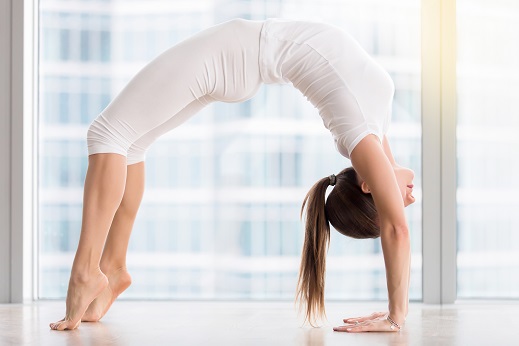
Performing Urdhva Dhanurasana
Practice Urdhva Dhanurasana with dedication and effort to witness its rewards for the body, mind, and soul. Follow the instructions below for performing the pose:
- Lie supine on a yoga mat. Bend the knees and place the feet close to the sitting bones.
- Fold the elbows, keep the forearms perpendicular to the floor, and rest the palms beside the ears with fingers pointing towards the shoulders.
- Press the hands and feet into the ground to push the body up and above from the floor on an exhalation.
- Gently, come into an Urdhva Dhanurasana stance with arms parallel to the yoga mat and shoulder blades against the back.
- Drop down the head and look at the floor.
- Hold this pose for 20 seconds in the beginning and gradually increase the length of time.
Modifying the Pose with Props
- Practitioners with tight armpits and groins can support the hands and feet on a yoga block.
- Secure a strap around the thighs to keep them hip-width apart and parallel to the ground.
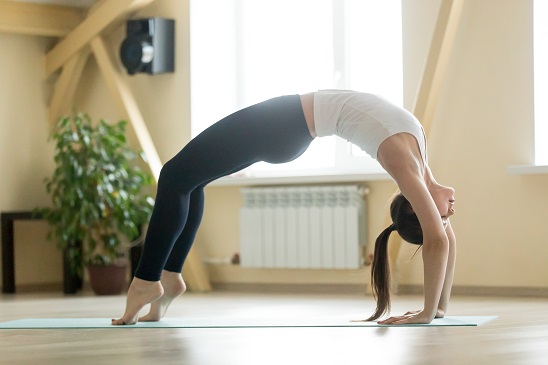
Health Benefits of Urdhva Dhanurasana
- Opens the Accessory Muscles: The human body is composed of numerous muscles performing diverse functions and often deprived of the care they deserve. One such type is the intercostal muscles in the ribs responsible for opening and shrinking the rib cage during breathing exercises. The wheel pose duly notices the importance of intercostal muscles and gives them a good stretch for optimal functioning.
- Strengthens the Arms and Shoulder Girdles: If you struggle with weak arms, wrists, and tight shoulders, then Urdhva Dhanurasana is worth all the effort and pain. During the practice of this pose, the arms, wrists, and shoulders are actively engaged, helping to create strength in these body parts along with strengthening the legs, spine, hips, and increasing flexibility.
- Lengthens the Spine: Our spine suffers a lot due to constant sitting and poor postural ways. Also, as we age, the spine compresses. Urdhva Dhanurasana is an effective yogic tool that lengthens the spine and creates the necessary space between the vertebrae, keeping it healthy and strong.
- Fuels the Body and Mind: A few seconds in the upward wheel pose is enough to make practitioners feel energized. Regular performance of Urdhva Dhanurasana enhances hormonal secretion, keeping the body-mind in a vitalized and relaxed state.
- Stimulates the Thyroid Glands: Biologically, the thyroid glands secrete hormones into the body responsible for the efficient working of the body cells. Urdhva Dhanurasana stimulates the thyroid and pituitary glands, helping them to function properly, which in return takes care of the human body system.
- Natural Slimming Effect: The stretching of the body in Urdhva Dhanurasana potently reduces fat buildup from the oblique areas. A devoted practice of this pose is directed towards natural slimming and toning of the body.
- Therapeutic for Osteoporosis: Urdhva Dhanurasana extends therapeutic benefits for back pain and osteoporosis. Practice this pose with the right alignment to savor the health rewards of Urdhva Dhanurasana and protect practitioners from osteoporosis.
- It’s a Heart Opener: Open your heart to feelings of love, kindness, and compassion with Urdhva Dhanurasana. It is an excellent heart-opener that expands the chest, benefiting the practitioner physically and emotionally.
Fold your body into Urdhva Dhanurasana and leave the mat feeling more energized and alive than ever.
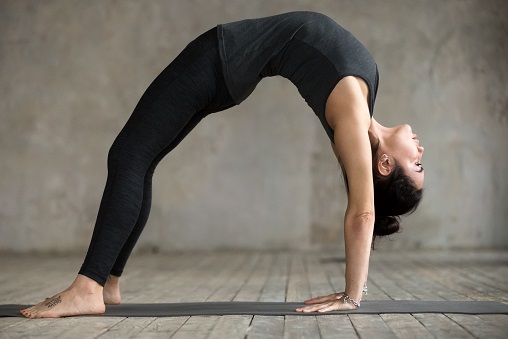
Also Read – Top 10 Excellent Benefits of Chakrasana (Wheel Pose)
Conclusion
Urdhva Dhanurasana, or Wheel Pose, is more than just a challenging backbend — it is a full-body posture that engages strength, flexibility, and focus simultaneously. Practicing this pose consistently not only stretches and opens the chest, shoulders, and spine but also strengthens the arms, legs, and core muscles. Beyond the physical benefits, it enhances mental clarity, relieves stress, and promotes a sense of confidence and vitality. For those progressing in their yoga journey, this pose encourages patience, body awareness, and mindfulness, making it a valuable tool for overall well-being.
Many students pursuing their 200 Hour Yoga Teacher Training in India at Rishikul Yogshala find Urdhva Dhanurasana particularly rewarding, as it combines strength, flexibility, and breath control — all of which are essential skills for teaching and practicing yoga effectively. Learning the correct alignment, understanding variations, and practicing with consistency help both beginners and advanced practitioners safely experience the profound benefits of the pose.
Whether you include it as part of your daily routine or as a milestone in your yoga training, Wheel Pose offers an opportunity to connect deeply with your body and mind. Embracing this asana regularly can enhance posture, release tension, boost energy, and cultivate resilience — making it a cornerstone of any dedicated yoga practice.
For more information and to start your transformative yoga experience, visit the Rishikul Yogshala.
FAQ
Q1. What is Urdhva Dhanurasana?
Ans. Urdhva Dhanurasana, or Wheel Pose, is a deep backbend that opens the chest, strengthens the spine, and stretches the shoulders, arms, and legs. Its name comes from Sanskrit: Urdhva means “upward” and Dhanurasana means “bow.”
Q2. Who can practice Wheel Pose?
Ans. This pose is suitable for individuals with basic flexibility and strength. Beginners should practice under guidance and may use props like yoga blocks or bolsters to support the back.
Q3. What are the benefits of Urdhva Dhanurasana?
Ans. It improves posture, strengthens the spine, opens the chest and heart, boosts energy, reduces stress, and enhances flexibility and balance. It also promotes better breathing and circulation.
Q4. How can I safely practice this pose?
Ans. Warm up with gentle backbends and shoulder stretches. Keep feet hip-width apart, engage the core, and avoid forcing the spine. If you feel pain in the lower back or wrists, come out of the pose slowly.
Q5. Can Urdhva Dhanurasana help with stress and anxiety?
Ans. Yes. This pose stimulates the nervous system, opens the chest, and encourages deep breathing, which can reduce tension and calm the mind.
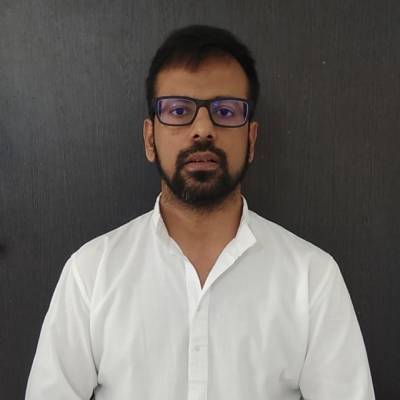
Lead Teacher in Yoga Philosophy, Pranayama, Meditation, Kundalini and Therapeutic Applications of Yoga
Born into a traditional spiritual home, Krishna spent over a decade climbing the corporate ladder at Capgemini and Morgan Stanley worldwide; before quitting them to explore the purpose of life. He set forth on a spiritual quest, Learning and Experiencing Yoga with Great Yogis and Spiritual Masters of the Modern World. Krishna's teachings comprises of the ancient practices of yoga through modern scientific reasoning. He specializes in Yoga Philosophy, Pranayama, Meditation, Kundalini and Therapeutic Applications of Yoga. Connect with your true nature and experience the mystical dimensions of yoga in conversation with Krishna.
View Instagram Profile View Linkedin Profile