 +91 9131509957
  info@rishikulyogshala.org




Top 5 Health Benefits of Kurmasana (Tortoise Pose)
Kurmasana (Tortoise Pose)
Yoga poses often draw inspiration from the natural world. Kurmasana, or the Tortoise Pose, mimics the tortoise’s characteristic of withdrawing inward when threatened. By adopting this pose, you connect deeply with your spiritual core.
As you practice Tortoise Pose, you enter a state of Pratyahara, the fifth limb of Patanjali’s Yoga Sutras. This pose encourages withdrawal of the senses—ears, eyes, nose, skin, mouth, and mind—into the inner self, facilitating a profound inner focus.
Preparing for Kurmasana
To maximize the health benefits of Tortoise Pose, practice it early in the morning, ideally during Brahmi Muhurta (one hour before sunrise). At this time, the mind is calm, making it easier to surrender to the self.
Begin with a few hip, back, and thigh-opening yoga postures to warm up your body. Take 5-10 breaths in each of the following poses:
1. Chair Pose (Utkatasana)

Read More: Top 10 Excellent Benefits of Utkatasana (Chair Pose)
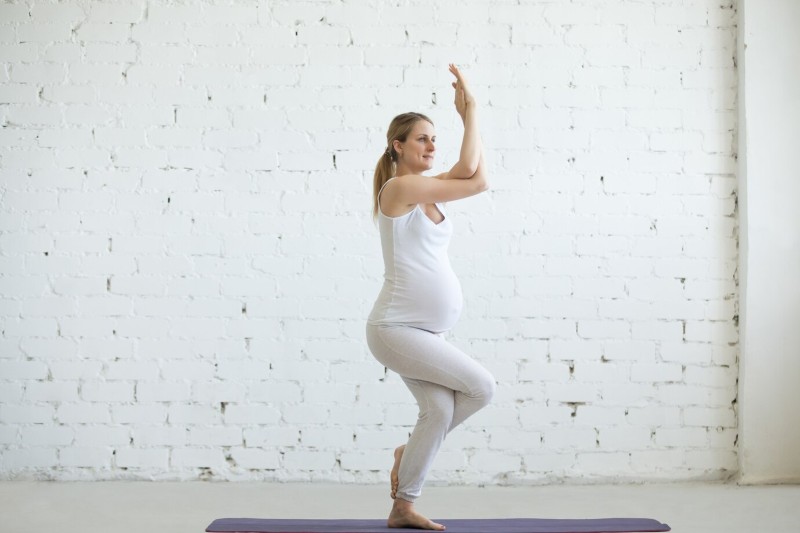
2. Eagle Pose (Garudasana)
Read More: What Are the Health Benefits of Garudasana (Eagle Pose)
3. Standing Forward Fold (Uttanasana)

Read More: Top 7 Health Benefits of Uttanasana (Standing Forward Bend Pose)
4. Downward Dog (Adho Mukha Svanasana)

Read More: Top 7 Health Benefits of Upward Facing Dog (Urdhva Mukha Svanasana)
5. Extended Side Angle Pose (Utthita Parsvakonasana)

Perform these yoga asanas on both sides before transitioning to Tortoise Pose.
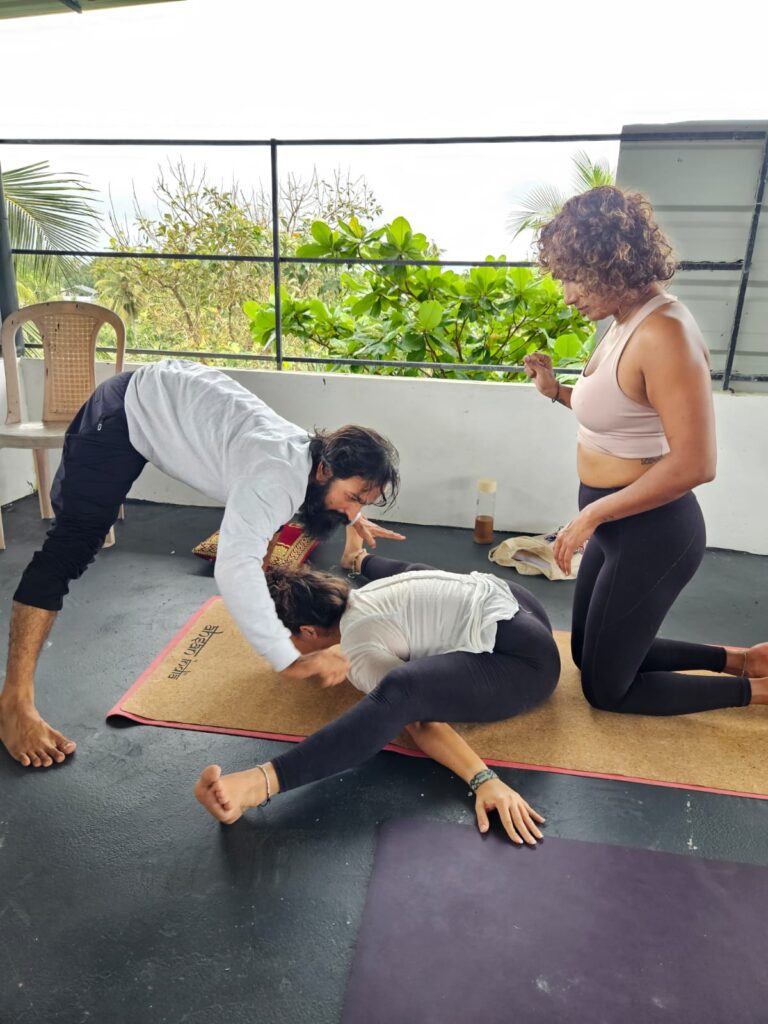
Steps to Practice Tortoise Pose Yoga
- Start in Dandasana (Staff Pose).
- Place your hands on the ground beside your hips.
- Press your thighs into the floor, flex your toes, and lift your chest.
- Keep your knees as wide as your shoulders.
- Bend your knees while keeping your toes flexed.
- Extend your arms and chest forward towards the ground between your legs.
- Fold your legs further to drop your shoulders under your knees.
- Once your shoulders are in place under your knees, stretch your arms out to the sides.
- Rotate your thighs inward and straighten your legs.
- Inhale to stretch your arms and chest to the sides.
- Exhale to extend your spine forward.
- Hold the pose for a few breaths, then release.

Safety Tips
- Listen to Your Body: Practice within your own limitations and adjust as needed.
- Warm-Up: Perform warm-up yoga asanas to prepare your body.
- Practice on an Empty Stomach: This allows for a fuller expansion of the body.
Variations of Kurmasana
- Ardha Kurmasana (Half Tortoise Pose)
- Supta Kurmasana (Sleeping Tortoise Pose)
Benefits of Ardha Kurm-asana
Ardha Kurmasana benefits include improved spinal flexibility, better posture, enhanced circulation, and stress relief. It gently stretches the back, shoulders, and hips while promoting relaxation and deep breathing.
Contraindications of Kurm-asana
Avoid this asana if you have sciatica, a slipped disc, a hernia, or chronic arthritis. Once healed, you can resume practicing the pose.
Benefits of Kurmasana
- Optimal Respiratory Function: The pose contracts the upper torso and stretches the arms, enhancing lung flexibility and function.
- Lumbar Massage: Extending the spine releases muscle tension in the lumbar region, reducing stiffness and enhancing flexibility.
- Boosts Metabolism: Stretching vital muscle groups improves blood circulation and metabolism.
- Enhanced Circulation: The forward fold increases blood flow and prana to the spine, opening blockages.
- Physical and Mental Relaxation: This asana fosters serenity by promoting breath awareness and sensory withdrawal.
Conclusion
Tortoise Pose, is a deep and calming yoga posture that offers both physical and mental benefits. Regular practice of this asana helps improve flexibility in the spine, hips, and shoulders while gently massaging the abdominal organs. It supports better digestion, reduces stiffness, and helps release stored tension from the body. Beyond the physical benefits, Kurm-asana encourages inward focus, patience, and mental relaxation, making it especially helpful for reducing stress and calming the nervous system.
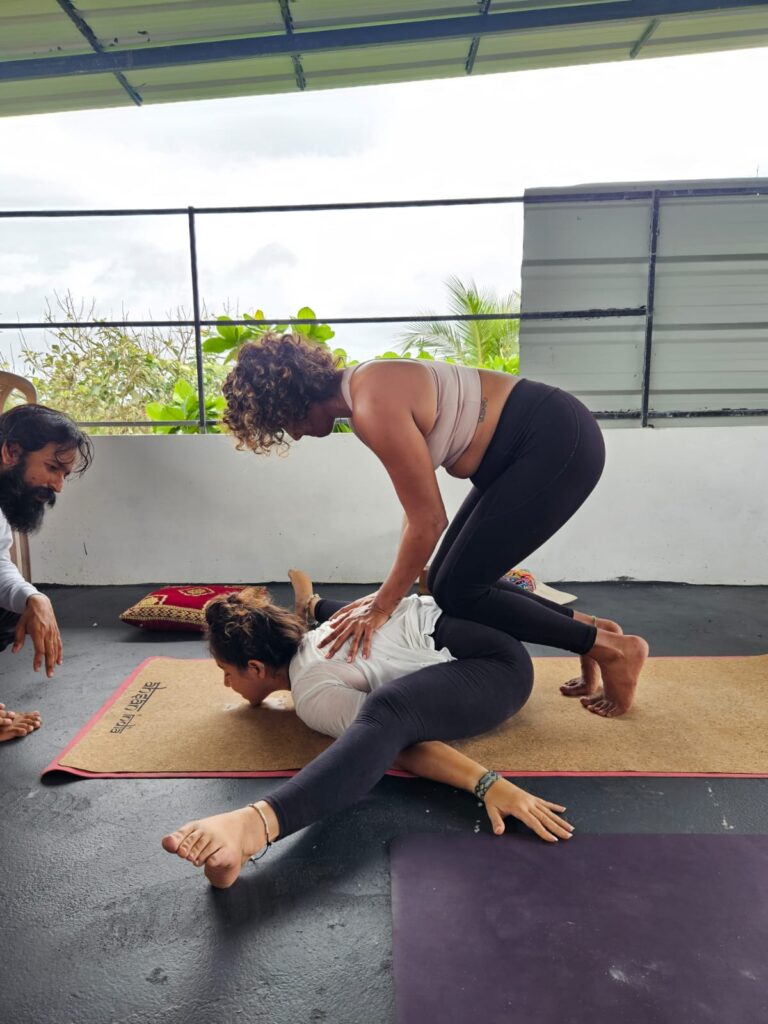
Like many advanced yoga poses, Kurm-asana should be practiced with awareness and proper guidance. Rushing into the pose or forcing the body can lead to discomfort or injury. With correct alignment, controlled breathing, and consistent practice, this posture becomes a powerful tool for self-awareness and inner balance.
In a 200 Hour Yoga Teacher Training in India, students learn Kurm-asana in detail, including proper alignment, variations, benefits, and precautions. At Rishikul Yogshala, traditional teaching methods help students understand not only how to practice this pose safely, but also how to teach it confidently. This deeper understanding allows practitioners to experience the true essence of yoga beyond just physical movement.
Frequently Asked Questions (FAQs)
Q1. What is Kurmasana in yoga?
Ans. Kurmasana, also known as Tortoise Pose, is a seated yoga posture that involves a deep forward bend. It helps calm the mind and stretch the spine, hips, and shoulders.
Q2. Is Kurmasana suitable for beginners?
Ans. Kurmasana is an advanced yoga pose. Beginners should not practice it without proper guidance and should first prepare the body with basic stretches.
Q3. What are the main benefits of Kurmasana?
Ans. It helps improve flexibility, supports digestion, reduces stress, and promotes relaxation and inner focus.
Q4. Who should avoid practicing Kurmasana?
Ans. People with back injuries, shoulder problems, herniated discs, or recent surgeries should avoid Kurmasana or consult a yoga teacher before practicing.
Last Updated On: 15-12-2025

Lead Teacher in Yoga Philosophy, Pranayama, Meditation, Kundalini and Therapeutic Applications of Yoga
Born into a traditional spiritual home, Krishna spent over a decade climbing the corporate ladder at Capgemini and Morgan Stanley worldwide; before quitting them to explore the purpose of life. He set forth on a spiritual quest, Learning and Experiencing Yoga with Great Yogis and Spiritual Masters of the Modern World. Krishna's teachings comprises of the ancient practices of yoga through modern scientific reasoning. He specializes in Yoga Philosophy, Pranayama, Meditation, Kundalini and Therapeutic Applications of Yoga. Connect with your true nature and experience the mystical dimensions of yoga in conversation with Krishna.
View Instagram Profile View Linkedin Profile