 +91 9131509957
  info@rishikulyogshala.org




Top 5 Handstand Yoga Poses
When you try a Handstand for the first time, your heart races, your breath gets sharper, and the world seems to stop for a moment. That feeling is the key to strength, awareness, and freedom. Handstands teach you how to get up with discipline, fall with grace, and come back with even more determination. As you learn to distribute weight through your hands, engage the right muscles, and use the power of your breath, you begin to unlock the joy behind these dynamic poses. This blog walks you through a selection of handstand practices that help you build alignment, stability, and mental clarity. From preparatory movements to advanced variations, each pose encourages you to expand your limits and discover how empowering inversion practice can be when approached with patience and intention.
What is Handstand?
Handstand Yoga Poses offer a unique rush of energy and a fresh perspective by being upside down. Engaging in these poses activates your entire body, including muscles such as the gluteus maximus, psoas major, spinal extensors, and oblique muscles.
The inverted position enhances blood flow to the head, boosting its health and vitality. The reversed blood flow in the legs and visceral region aids in tissue regeneration. Additionally, the increased oxygen and nutrient supply to the brain enhances mental well-being. Handstand Yoga Poses are associated with the Sahasrara (crown chakra), influencing cognitive abilities and awareness. Practicing handstands helps you connect with your higher self and the divine energy of the universe.
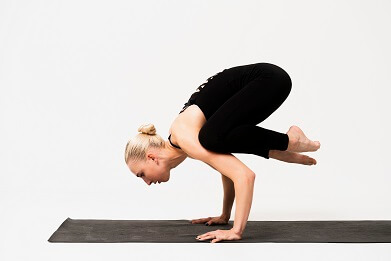
Preparatory Handstand Yoga Poses for Handstands
To prepare for hand stand pose, focus on these key poses:
- Plank Pose: Strengthens the core and arms, essential for supporting handstand poses. This posture builds wrist strength and overall body support.
- Boat Pose (Navasana): Engages the core, stretches the hamstrings, and strengthens the hips, which helps you control your lower body in inverted positions.
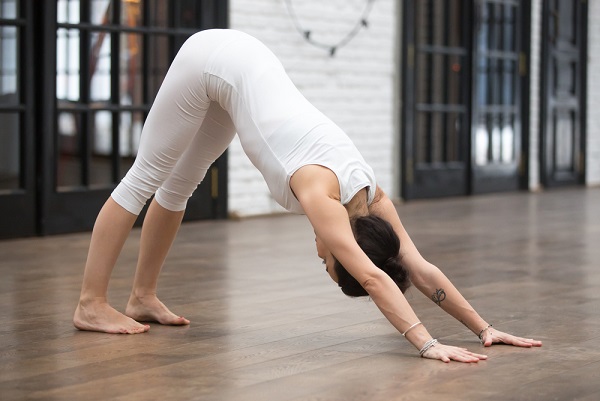
- Downward Dog: A beginner-level inversion pose that aids in proper body alignment while providing stretching and strengthening benefits.
- Child Pose (Balasana): Cultivates patience and groundedness by releasing tension and fostering calmness.
Also Read:- kumbhakasana (Plank Pose) – Top 7 health benefits
Steps to Achieve a Handstand
- Stage 1: Start with the L stand against the wall. Position yourself on all fours with your heels against the wall. Lift one leg at a time, aligning your foot with your hips. Gradually straighten both legs, lengthen the sides of your body, engage your abdominals, and roll your shoulders away from your ears.
- Stage 2: Face the wall and place your hands about 3-4 inches away. Enter the downward-facing dog pose, checking your alignment. Experiment with hops and donkey kicks to adjust your balance.
- Stage 3: Gently lift into a handstand. Keep your hips forward towards the wall so that your legs can rise above your hands. Find your balance by lifting your feet off the wall.
Advanced Handstand Yoga Asanas
Prepare your body and mind with these advanced yoga handstand poses:
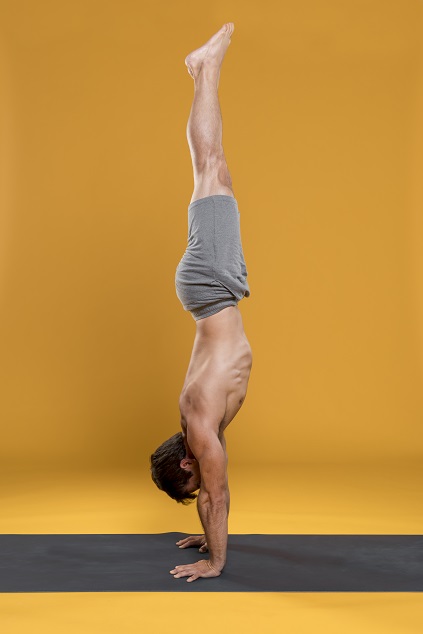
- Downward Facing Tree Pose (Adho Mukha Vrksasana): Balance on your hands with your legs raised high. This pose offers physical, mental, and spiritual benefits, such as strengthening body areas, emotional stability, and energizing the crown chakra. Begin in downward dog, lift your heels, shift your weight to the balls of your feet, and transition into a full handstand.
- One-Handed Handstand (Eka Hasta Adho Mukha Vrksasana): An advanced variation of the downward-facing tree pose. This pose boosts mood, confidence, and blood flow to the brain. From the handstand position, shift weight to one arm, balancing along the midline while keeping the other arm alongside your legs.
- Scorpion Handstand (Vrschikasana): Adds beauty and boldness to handstands. It stimulates abdominal and reproductive organs, opens the chest, and improves respiration. Avoid this pose if you have neck, shoulder, heart issues, headaches, or high blood pressure. Start in a handstand asana, reach back with your legs, and arch your spine while bringing your feet towards your head.
- Handstand in Lotus Pose (Adho Mukha Vrksasana in Padmasana): Builds strength, stability, and calm for body, mind, and soul. Begin in a handstand, then fold one leg into Half Lotus Pose. Once stable, fold the other leg into Full Lotus Pose (Padmasana).
- Handstand Split (Hanumanasana in Adho Mukha Vrksasana): Strengthens the back body and opens the hips. Perform a handstand against a wall, then find your balance and split your legs.
Read More – What is Hanumanasana? Top 10 Hanumanasana Benefits for Flexibility and Strength
Handstand Benefits
- Strengthens shoulders, arms, and core muscles
- Improves balance and body awareness
- Enhances focus and concentration
- Boosts circulation and energizes the body
- Builds confidence and mental resilience
- Improves posture and spinal alignment
- Stimulates the lymphatic system and aids detoxification
- Encourages mindfulness and breath control
Conclusion
Handstand yoga is much more than an advanced pose — it is a practice that builds strength, balance, focus, and confidence. Mastering handstands requires patience, consistency, and a strong connection between the body and mind. Practicing poses like the Downward Facing Tree Pose, Vrschikasana and handstand push up not only strengthens your shoulders, arms, and core but also improves posture, circulation, and overall body awareness. Each attempt teaches resilience, focus, and the importance of breath, making handstand yoga both a physical and mental workout.
Beyond the physical benefits, handstand practice encourages mindfulness, helping you stay present and calm while challenging your limits. As you progress, you’ll notice increased confidence in your body and movement, along with a sense of empowerment that extends beyond the yoga mat.
For those looking to take their yoga practice deeper, Rishikul Yogshala offers 200 hour Yoga Teacher Training in India and 300 hour Yoga Teacher Training in India, providing comprehensive guidance in alignment, meditation, breathwork, and advanced asanas like handstands. By joining these programs, you can not only perfect your handstand skills but also grow as a confident, skilled yoga practitioner and teacher.
FAQ: Handstand Yoga
Q1: How to do a handstand?
A: Place your hands shoulder-width apart, engage your core, and kick up one leg at a time. Use a wall for support if needed.
Q2: How to do a handstand for beginners?
A: Start with wall-assisted handstands or dolphin poses, practice kicking up gently, and build strength gradually.
Q3: How to do handstand push-ups?
A: From a handstand against a wall, bend elbows to lower your head, then push back up. Start with a few reps and increase over time.
Q4: What are the benefits of handstands?
A: Handstands strengthen shoulders, arms, and core, improve balance, boost focus, and build confidence.
Q5: How long should I practice handstands daily?
A: Start with 5–10 minutes focusing on form, then gradually increase as you get stronger.
Last Updated On: 26-11-2025

Lead Teacher in Yoga Philosophy, Pranayama, Meditation, Kundalini and Therapeutic Applications of Yoga
Born into a traditional spiritual home, Krishna spent over a decade climbing the corporate ladder at Capgemini and Morgan Stanley worldwide; before quitting them to explore the purpose of life. He set forth on a spiritual quest, Learning and Experiencing Yoga with Great Yogis and Spiritual Masters of the Modern World. Krishna's teachings comprises of the ancient practices of yoga through modern scientific reasoning. He specializes in Yoga Philosophy, Pranayama, Meditation, Kundalini and Therapeutic Applications of Yoga. Connect with your true nature and experience the mystical dimensions of yoga in conversation with Krishna.
View Instagram Profile View Linkedin Profile