 +91 9131509957
 info@rishikulyogshala.org




Top 7 Benefits of Yoga for Stress Management
Stress Relief and Management in the Modern World
The modern world often leads us to categorize and judge others, but true understanding comes from respecting everyone and supporting their process of healing. Stress-related challenges often stem from past experiences, relationship pressures, financial concerns, and increasing responsibilities. When stress is not managed properly, it can gradually turn into anger, frustration, emotional withdrawal, and other negative responses that affect both behavior and overall well-being. Over time, this stress becomes deeply rooted in our patterns, influencing how we think, feel, and react in daily life.
In such situations, gentle self-care practices can play an important role in restoring balance. Yoga, when approached mindfully, has long been used as a natural method for calming the mind and releasing emotional tension. Many people turn to yoga for stress relief as it encourages awareness of the breath and body, helping the nervous system settle. Through consistent practice, yoga for stress and anxiety supports emotional stability and clarity, making it easier to respond rather than react. As a result, yoga for stress becomes not just a practice, but a way of cultivating inner calm and resilience in a demanding world.

Why Become a Patient When You Can Be a Healer?
Yoga offers a path away from the stress that burdens your mind. By practicing yoga, you engage in stretching, breathing exercises, asanas, and meditation, while distancing yourself from societal pressures. Spirituality, as practiced through yoga, serves as a powerful stress buster and a source of hope, not tied to any particular religion.
There’s always a way to overcome life’s toxic elements; it starts with the will to change. As a human being, you deserve happiness. The benefits of yoga are extensive, uniting your mind, body, and spirit to foster physical and mental transformation. You don’t have to wait until stress overwhelms you to start practicing yoga.
Top 7 Benefits of Yoga for Stress Management
- Improved Fitness
- Regular yoga practice enhances fitness. Asanas like Uttanapadasana help reduce belly fat and maintain physical health. Stay active and re-energize with yoga.
- Stress Relief
- Breathing exercises, meditation, and Pranayama are effective tools for achieving a calm and focused mind. Mastering your breath allows you to maintain inner peace despite external stress.
- New Perception
- Yoga encourages a shift from old, stagnant thoughts to a fresh outlook. Regular practice helps replace stubbornness with a new perspective, enhancing how you interact with people and situations.
- Getting Rid of Medical Problems
- Avoid the costs and stress of medical issues by staying fit and healthy through yoga. Ayurvedic practices also offer natural remedies that can complement your yoga routine.
- Building Hope and Balance
- Yoga helps maintain balance in personal and professional life, fostering hope and resilience. Sending positive thoughts to the universe aids in stress relief without causing harm to others.
- Karma Yoga: A Healing Force
- Contributing to others’ happiness and support fosters endorphin release and positive emotional signals, which in turn benefit your own well-being.
- Healthy Eating
- Healthy eating supports both physical appearance and mental health. It aids in detoxifying the body and rewiring the brain, contributing to overall wellness.
Yoga Poses for Stress Management
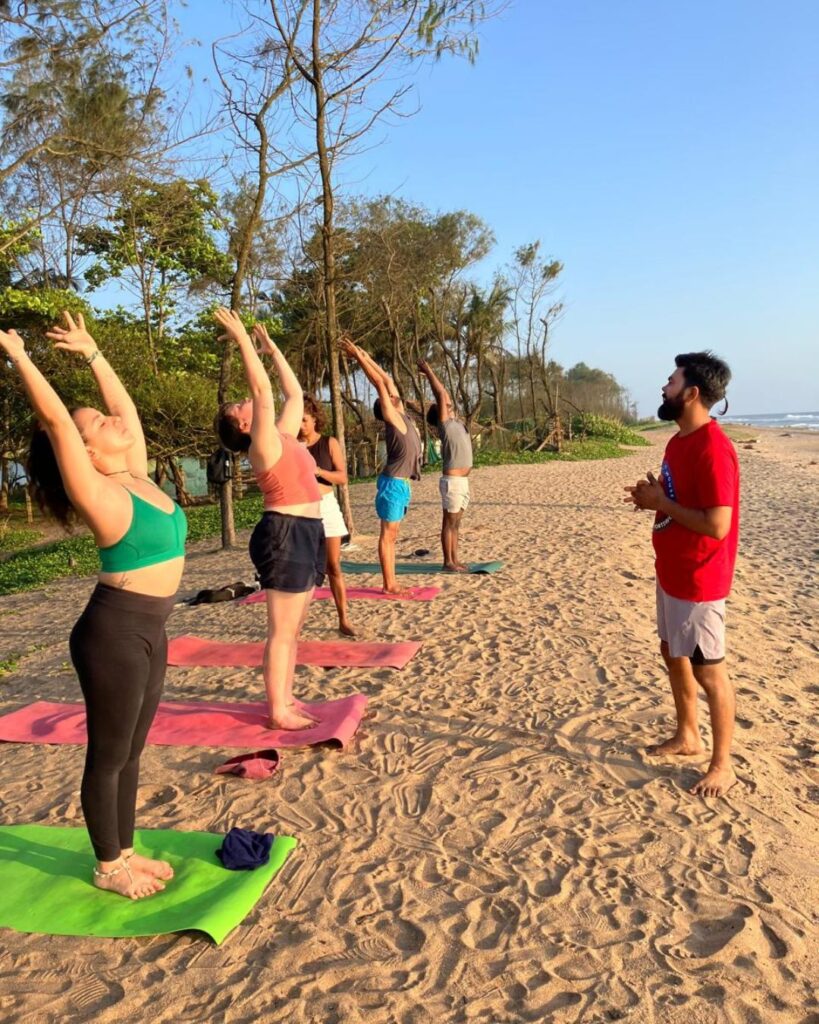
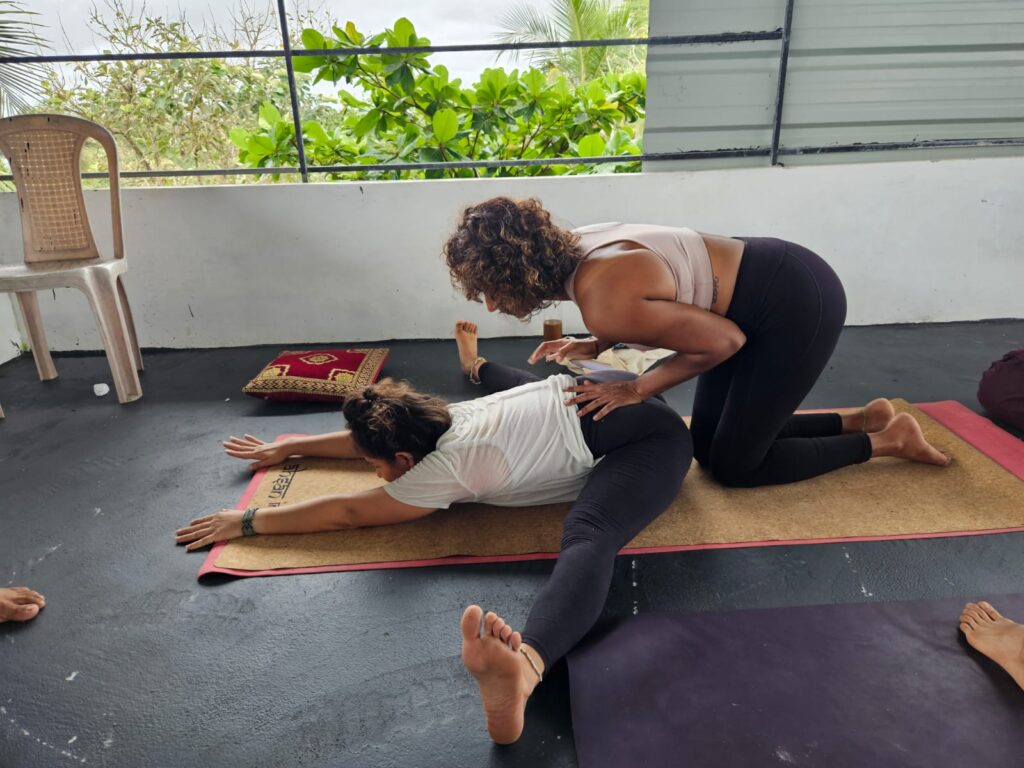
The following yoga poses and breathing practices are widely recognized in yogic and therapeutic contexts for their ability to calm the nervous system, release mental tension, and support emotional balance. Practiced mindfully, yoga for de stressing supports relaxation and emotional stability, helping individuals manage stress more effectively when incorporated into a regular routine.
- Dolphin Pose (Ardha Pincha Mayurasana): Helps reduce fatigue, improves circulation to the brain, and calms the mind through controlled inversion.
- Rabbit Pose (Sasangasana): Encourages introspection and releases tension from the neck, shoulders, and spine, supporting mental relaxation.
- Eagle Pose (Garudasana): Enhances focus and concentration while helping release emotional and physical tightness caused by stress.
- Plow Pose (Halasana): Stimulates the parasympathetic nervous system, helping to quiet the mind and relieve accumulated stress.
- Child’s Pose (Balasana): A grounding posture that promotes deep relaxation and gently soothes the nervous system.
- Standing Forward Bend (Uttanasana): Helps relieve anxiety and mental fatigue by calming the brain and stretching the back of the body.
- Legs Up the Wall Pose (Viparita Karani): A restorative posture known to reduce stress, anxiety, and emotional exhaustion.
- Corpse Pose (Savasana): Essential for complete physical and mental relaxation, allowing the body to integrate the benefits of practice.
Also Read: Yoga For Mental Health – 5 Best Type Of Yoga Poses For Stress Relief
Pranayama for Stress Management
- Anulom Vilom (Alternate Nostril Breathing): Balances the nervous system and promotes mental clarity.
- Bhramari Pranayama (Humming Bee Breath): Reduces anxiety, anger, and mental agitation by calming brain activity.
- Deep Diaphragmatic Breathing: Activates the relaxation response and helps lower stress levels naturally.
Practicing these yoga poses and pranayama regularly will make you feel light, free, and resilient against stress.
Read More – The Power of Anulom Vilom Pranayama in Modern Living
Conclusion
Stress has become an unavoidable part of modern life, but how we respond to it determines our overall health and well-being. Yoga offers a holistic and sustainable approach to stress management by addressing the body, breath, and mind together. Through regular practice, yoga helps calm the nervous system, release accumulated tension, improve emotional awareness, and cultivate mental clarity.
The true benefits of yoga for stress management lie in consistency and mindful practice. As the body becomes more relaxed and the mind more centered, individuals develop healthier responses to daily challenges rather than reacting from a place of tension or overwhelm. Over time, yoga not only reduces stress but also fosters resilience, inner balance, and a deeper connection with oneself, making it a valuable tool for long-term physical and emotional well-being.
For more information on the transformative power of yoga, explore our 200 Hour Yoga Teacher Training in India, 300 Hour Yoga Teacher Training in India, or 500 Hour Yoga Teacher Training in India. Additionally, consider joining our Ayurveda Retreat in India or Yoga Retreat in India to further enhance your practice.

MEDITATION, INSPIRATIONAL AND SPIRITUAL GUIDE
Yogi Gangesha Chaitanya is a master of Yoga Philosophy, Meditation, Pranayama, and Spiritual Guidance, trained under Swami Rama and renowned institutions like the Himalayan Tradition and Sri Aurobindo Ashram. With expertise in Kundalini Yoga and meditation, he mentors students in 200-hour and 300-hour Yoga Teacher Training programs, guiding them toward inner awareness, spiritual growth, and a deeper understanding of yoga.
View Instagram Profile

- What Are Healing Frequencies? Understanding the Power of Sound and Vibration

- Solar Plexus Chakra: What It Does, Where It Is, and How to Balance It?

- Om Shanti Mantra: Meaning, History & Its Deep Connection With Yoga

- Ujjayi Pranayama: Steps, Benefits & How to Practice

- Is 200 Hour Yoga Teacher Training Course Enough to Build a Successful Teaching Career?