 +91 9131509957
  info@rishikulyogshala.org




5 Best Meditation Exercises (Techniques) for Beginners
The power of Meditation exercises has been the subject of many great thinkers, from Buddha to Steve Jobs. But you don’t have to be a monk or a mystic to receive its rewards. It only takes a few minutes of daily practice to help you reduce stress, find focus, and even get a better night’s sleep.
The problem, however, is not knowing where to start — because there are numerous techniques available. To make this easier, we’ve gathered five of the most powerful meditation practices, backed by tradition and science, that you can start right now to bring more balance, clarity, and peace into your life.
What is Meditation?
Meditation is the practice of allowing your mind to rest quietly and with clarity for a few moments. Simpler still, it’s a practice for becoming more attentive to your thoughts and feelings and being better able to redirect the stream of your thinking. Regular and disciplined meditation practice might allow you to be calmer, clearer, and more balanced in your daily life.
The point isn’t to stop your thoughts but to learn to direct them and to be kind to yourself as you find the peace within.
The beauty of meditation is its simplicity; it can be done wherever you are and whenever you wish.
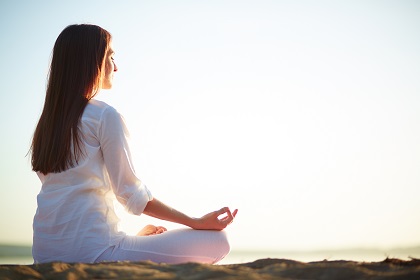
Types of Meditation Techniques (Meditation Exercises)
The majority of meditation practices are fairly straightforward, beginning with basic breathing meditations and progressing to more advanced meditation techniques.
Meditation techniques are usually divided into two categories,
- Concentrative
- Non-concentrative.
1. Concentrative: In the concentrative methods, we concentrate on something, but most often it is not inside ourselves; it is generally some object: the flame of a candle, a sound from a musical instrument, or a mantra.
2. Non-Concentration: This method, on the other hand, can be pretty much anything else, such as sounds in your environment, internal body states, or even just your plain old breathing.
Note: There can be overlap with these techniques — meditation can also be both concentrative and non-concentrative.
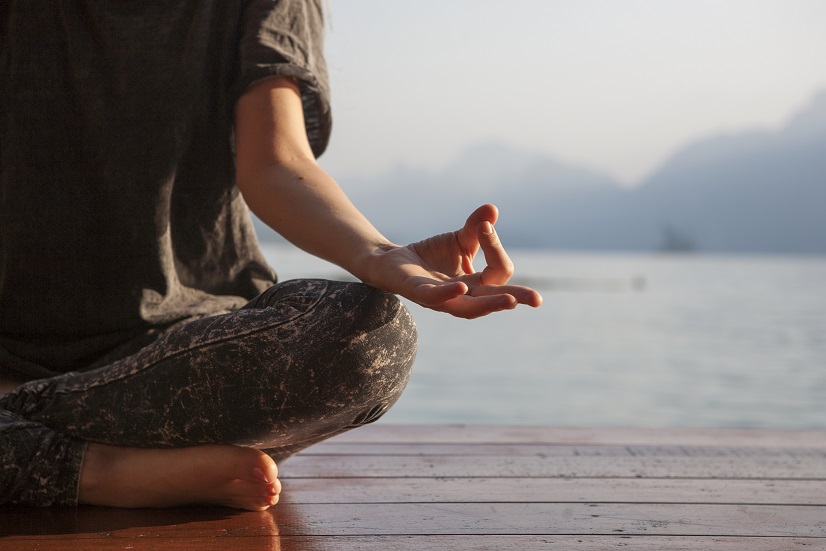
5 Best Meditation Techniques for Beginners
Meditation is a highly personal practice because what is relaxing for one person may be distracting for another. Some people struggle to switch off their minds, so exploring different meditation techniques is beneficial because it allows their minds to wander on a great adventure.
1. Simple Meditation (Breathing)
It’s no coincidence that, according to Science Daily, certain types of meditation and breathing techniques can improve cognitive function. A 2018 study from Trinity College Dublin linked breath-focused meditation to enhanced attention and brain health.
Mindful breathing is centred on attending to the breath. It’s a simple yet effective technique that anyone can try. Here is the process:
- Sit in a steady meditation pose for meditation (like Padmasana).
- Let the breaths come naturally, and just breathe a bit deeper than normal.
- Keep focusing on the inhalation and exhalation to relax further.
- If you are distracted or have associated thoughts, don’t worry about it! Just notice that you’ve drifted off, and gently bring your attention back to your breath.
Tips: Silence your phone and choose a quiet, distraction-free room with good air circulation and a gentle, calming atmosphere for meditation positions.
2. Mindfulness Meditation
Mindfulness is a type of meditation that, like activity meditation, doesn’t resemble traditional meditation much. Mindfulness is the practice of being present in the moment, rather than thinking about the past or future.
The idea is basic, but, in practice, it is easier said than done. Attending to sensation in your body is a way to stay “in the now”. Another way is to pay attention to your feelings and notice where they appear in your body — not to figure out why you feel that way, but just to observe the sensations.
Tips: Choose any activity you enjoy the most, such as painting, dancing, singing, or physical or mental exercise.
3. Focused Meditation
A concentration meditation is when you focus on something, say a flower or a candle, and look at it for as long as possible.
Go for whatever tickles your senses. For example, if you selected a yellow rose, you may sit there and look at it, realising you can touch and feel its velvety skin. Or you could notice any lines or creases in the rose, or lose yourself in the line of yellow.
A focus meditation is just to go into all the particularities of something so much that you don’t see anything else.
However, for many people, this is easier than focusing on nothing, but the core of the idea remains the same: it is important to stay within the present moment.
4. Mantra Meditation
The Sanskrit word “mantra” is formed from the words “manas”, meaning mind, and “tra”, meaning a tool; literally, a mind tool or a tool for training the mind. Mantras are yogic devices for working with the mind that use the power of sacred sounds to evoke certain psychological states.
The mental or verbal repetition of a special mantra enhances the acuteness of focused attention, eliminating its dispersal in the flow of verbal thought.
With the help of mantra repetition, focus and clarity of consciousness are achieved. The technique of mantra meditation is based on the usage of a special sacred sound – a mantra, a prayer.
- To practise it: Choose your special and unique mantra that suits your needs.
- Sit down, put your back straight, relax your whole body, and focus on your breath. After that, repeat your mantra 108 times with intention.
- Every time you pronounce it as if you are going to write it down.
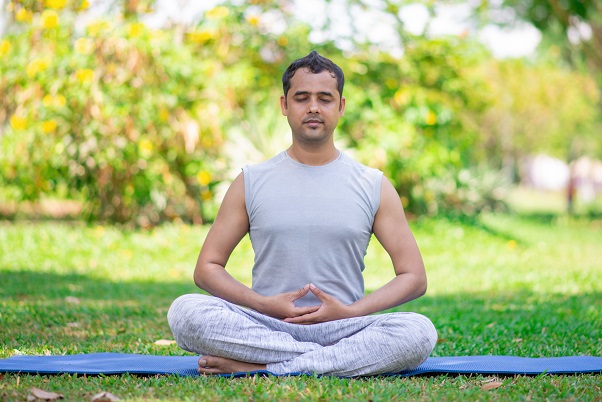
Tip: Well-known mantras are ‘Ohm’ and ‘Aham Prema, which means ‘divine love’. You can also count the number of repetitions on a special tool, such as a mala.
5. Walking Meditation
In walking meditation, you are supposed to walk in silence as you watch and observe all the activities happening around you.
Walking meditation is derived from Zen Buddhism and is also called kinhin. “Kinhin” is a special walking during which practitioners walk around the room, and they put their hands in shashu.
- Shashu: A special position of the hands when one hand is clenched into a fist and is located behind the other hand.
- On the other hand, it is clenched in a fist and is held within the other fist.
- When walking, a step is taken after each complete breath, and the beginning is announced by ringing the bell.
There are many variants of mindful walking, and walking meditation can be a rewarding and calming experience. Take your Meditation to the next level and explore yoga props such as Yoga Bolsters and Meditation Cushions to enhance your meditation experience.
Tips: You can see the leaves in the trees if you’re outside, feel the sun on your skin, or listen to the sound of your feet hitting the ground.
Other Meditation Techniques
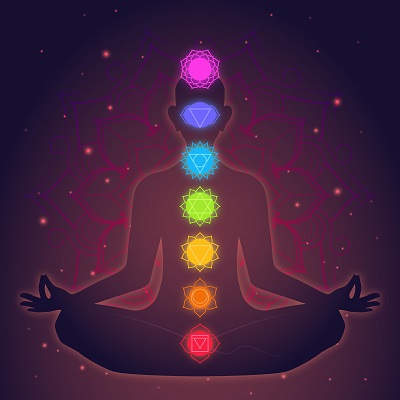
1. Chakra Meditation
Chakra meditation can keep your body’s main energy centres, chakras, open and balanced. Blocked or unbalanced chakras can lead to physical and mental discomfort. This meditation is great for the harmonic flow of your energy.
2. Guided Meditation
Guided meditation, also known as guided imagery or visualisation, is a form of meditation in which you are led by a guide to a scene or place in your mind. There is typically a teacher or recording guiding the practice; hence, it’s called “guided”. You can also engage your senses — sight, sound, smell, or touch — to make the experience more calming.
3. Vipassana Meditation (Simple Guide)
Vipassana translates to “seeing things as they really are.” It teaches you to listen within yourself and make a connection between the sensations in your body, which brings peace, balance, and compassion. Vipassana practices, which are typically taught as part of a 10-day course, require students to go without substances such as alcohol and refrain from having sex so that they can concentrate entirely on the practice.
Also Read – 9 Incredible Health Benefits of Meditation
Conclusion
Whether you want to lower stress or increase your spiritual practice, there’s a meditation style perfect for you. And don’t be worried about experimenting with different styles—sometimes you just need to go through a few before you find the one that really suits.
Just keep in mind that meditation is not something you should be making yourself do. If it feels like a chore, it won’t help. But with gentle, regular practice, it becomes natural, supportive, and even enjoyable.
If you have experimented with different methods but still seek authentic guidance, then Rishikul Yogshala can be your guide for meditation training. For that, you can join various yoga courses, including the 200 Hour Yoga Teacher Training in India and the 300 Hour Yoga Teacher Training in India. Through these courses, you will gain a deep understanding of meditation and its various types. Begin your meditation journey today and discover the peace and clarity within yourself.
FAQ
Q1. Should I meditate before or after exercise?
A1. Both work — meditate before for focus, or after for relaxation.
Q2. Are breathing exercises considered meditation?
A2. Yes, focused breathing is a type of meditation.
Q3. Can you meditate while exercising?
A3. Yes, light activities like walking or yoga can be meditative.
Q4. Does meditation count as exercise?
A4. Not physically, but it improves mental and physical well-being.
Updated On: 03-01-2026

Lead Teacher in Yoga Philosophy, Pranayama, Meditation, Kundalini and Therapeutic Applications of Yoga
Born into a traditional spiritual home, Krishna spent over a decade climbing the corporate ladder at Capgemini and Morgan Stanley worldwide; before quitting them to explore the purpose of life. He set forth on a spiritual quest, Learning and Experiencing Yoga with Great Yogis and Spiritual Masters of the Modern World. Krishna's teachings comprises of the ancient practices of yoga through modern scientific reasoning. He specializes in Yoga Philosophy, Pranayama, Meditation, Kundalini and Therapeutic Applications of Yoga. Connect with your true nature and experience the mystical dimensions of yoga in conversation with Krishna.
View Instagram Profile View Linkedin Profile