 +91 9131509957
  info@rishikulyogshala.org




5 Excellent Benefits of Chaturanga Dandasana (Four-Limbed Staff Pose)
What is Chaturanga Dandasana (The Four-Limbed Staff Pose)?
Chaturanga Dandasana, or the Four-Limbed Staff Pose, is a pivotal posture in Sun Salutations and a cornerstone of the Vinyasa Flow Yoga style. This pose is not only a key component in sequences but also an essential standalone asana that demands respect and focus from practitioners. It plays a crucial role in teaching proper alignment and preparing individuals for more complex yoga asanas.
Practicing Chaturanga Dandasana offers significant benefits, including improved strength and stability. While the yoga pose can be challenging, its rewards are profound. It enhances physical, mental, and emotional health, preparing practitioners for advanced arm balances, inversions, and backbends.
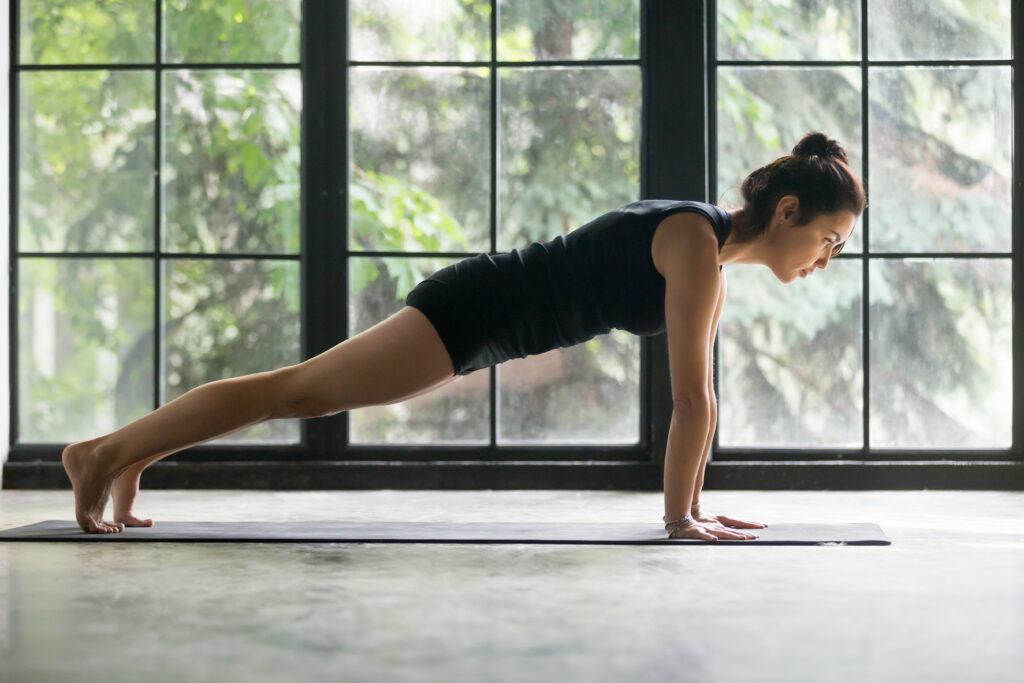
Chaturanga Dandasana, or the Four-Limbed Staff Pose, is a basic yoga pose that makes the whole body strong, specifically the arms, shoulders, core, and wrists. Chaturanga Dandasana is an asana that demands control, balance, and alignment, and thus it’s a necessary transition in vinyasa and Ashtanga yoga flows.
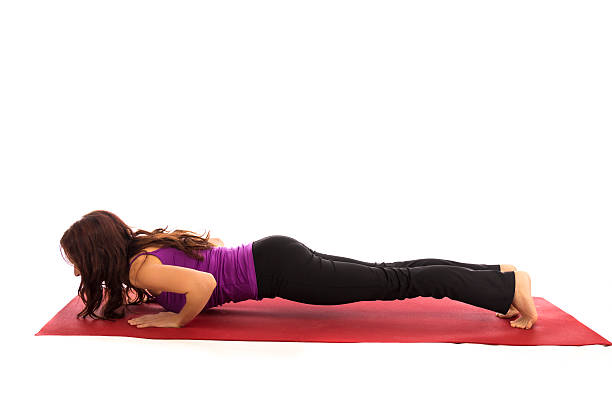
To execute Chaturanga properly, keep the elbows close to the body, engage the core, and descend with control, keeping a straight line from head to heels. Don’t collapse the shoulders or drop the hips, as this can lead to strain or injury. With regular practice, Chaturanga Dandasana develops strength, stamina, and resilience and is thus a key component of a well-rounded yoga practice.
Benefits of Chaturanga Dandasana
Chaturanga Dandasana benefits include strengthened arms, shoulders, and core, improved posture, and enhanced stability for the entire body.
- Develops Core Stability: A strong core is essential for overall stability and injury prevention. Chaturanga Dandasana strengthens the core, helping to maintain a balanced spine and reducing the risk of back injuries and peripheral weakness.
- Strengthens Arms and Wrists: This pose significantly improves the strength of the arms, forearms, and wrists, which are crucial for various daily activities and athletic performance.
- Builds Muscular Strength: Chaturanga Dandasana helps build and strengthen the muscles in the shoulders, back, and legs. It is particularly beneficial for those with inactive lifestyles, offering an effective alternative to medication and surgery for shoulder and back health.
- Prepares for Advanced Yoga Postures: By strengthening the arms, toning the abdominal muscles, and improving lower back health, this pose prepares practitioners for more challenging yoga postures like arm balances and backbends.
- Promotes Overall Body Health: This pose enhances physical and mental well-being by increasing flexibility and strength in key areas such as the arms, legs, and abdomen. Its ‘push-up-like’ stance helps correct posture and lengthen the spine muscles.

Instructions for Performing Chaturanga Dandasana
- Start in Downward-Facing Dog Pose (Adho Mukha Svanasana) and transition into Plank Pose (Kumbhakasana).
- Exhale and lower your torso and legs a few inches above and parallel to the ground.
- Keep the legs actively engaged and the tailbone firmly in place throughout the pose.
- Gaze forward.
- Hold the pose for 30 seconds.
Contradictions and Cautions
- Avoid this pose if you have Carpal Tunnel Syndrome, are pregnant, or have shoulder or wrist injuries.
- Ensure your shoulders do not drop lower than your elbows during the pose.
- Avoid elevating the hips.
Conclusion
Chaturanga Dandasana is more than just a transition pose—it’s a foundational strength builder that enhances core stability, tones the arms and shoulders, improves overall body awareness, and lays the groundwork for safe progressions into advanced asanas. When practiced with mindful alignment and controlled breath, it fosters muscular endurance, supports better posture, and deepens your connection between movement and breath. Integrating Chaturanga into your regular vinyasa flows strengthens not just the body, but also focus and discipline on the mat.
Because correct alignment and strength engagement are essential to practice Chaturanga safely and effectively, learning the proper technique can make all the difference. In the Residential 200 Hour Yoga Teacher Training in India at Rishikul Yogshala, students explore detailed alignment cues, foundational strength principles, and smart sequencing that help practitioners master core poses like Chaturanga Dandasana while minimizing risk. With consistent practice and expert guidance, this pose becomes a powerful tool for building a resilient, balanced, and sustainable yoga practice.

Lead Teacher in Yoga Philosophy, Pranayama, Meditation, Kundalini and Therapeutic Applications of Yoga
Born into a traditional spiritual home, Krishna spent over a decade climbing the corporate ladder at Capgemini and Morgan Stanley worldwide; before quitting them to explore the purpose of life. He set forth on a spiritual quest, Learning and Experiencing Yoga with Great Yogis and Spiritual Masters of the Modern World. Krishna's teachings comprises of the ancient practices of yoga through modern scientific reasoning. He specializes in Yoga Philosophy, Pranayama, Meditation, Kundalini and Therapeutic Applications of Yoga. Connect with your true nature and experience the mystical dimensions of yoga in conversation with Krishna.
View Instagram Profile View Linkedin Profile