 +91 9131509957
  info@rishikulyogshala.org




6 Simple Steps to Perform Adho Mukha Svanasana
Downward Facing Dog, or Adho Mukha Svanasana, makes your body feel longer, stronger, and more balanced right away. It helps you breathe, improves blood flow, and wakes up all of your major muscle groups. This article will show you exactly how to do this pose in six easy steps that will help you get your body in the right position. You will learn about its many great effects on your spine, shoulders, legs, and mind. You will also learn helpful changes, warm-up tips, and safety tips that make this pose possible for everyone. You will learn how this pose can change your daily practice as you read on.
Adho Mukha Svanasana Yoga for the Mind, Body, and Soul
The phrase “Yoga for the mind, body, and soul” sounds wonderful, but the true benefits of this ancient practice are even more remarkable when experienced firsthand. With thousands of postures and asanas, each technique in this majestic art form is unique. While every yoga pose offers distinct benefits, we have highlighted one particular asana that you will love exploring.
Adho Mukha Svanasana, or Downward Facing Dog, is a ground-level yoga asana that invigorates both the mind and body. Rejuvenating stretch is given all over the body with this strengthening pose of the arms, shoulder, and leg muscles while helping to flex and strengthen the backbone and hamstrings.
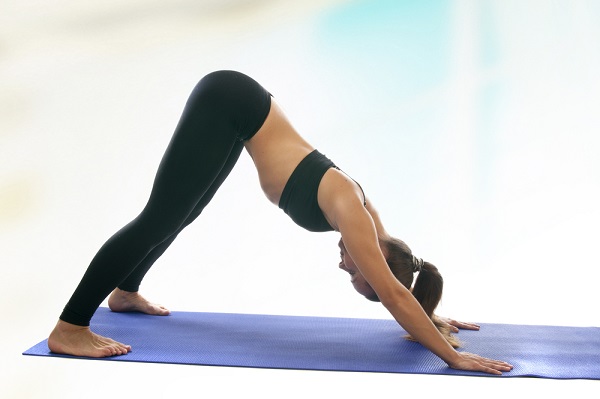
Adho Mukha Svanasana, known as the Downward Facing Dog Pose in English, is a fundamental pose in yoga. This versatile asana is a key component of the Sun Salutation series (Suryanamaskar) and is suitable for practitioners of all levels, including beginners. Adho Mukha Svanasana benefits include improved flexibility, strengthened muscles, better posture, and relief from stress and fatigue. Here are some stunning benefits of Adho Mukha Svanasana:
- Restores and revitalizes energy: Helps in replenishing body energy and overall vitality.
- Tones muscles: Renders tone to the calves, back, and hip muscles.
- Improves lung capacity: Enhances breathing and lung function.
- Reduces anxiety and depression: Promotes mental well-being and relaxation.
- Boosts cognitive function: Enhances memory and cognitive skills through improved oxygen and blood flow to the brain.
- Strengthens and lengthens the spine: Alleviates discomfort or pain in the middle and lower back.
- Full-body stretch: Stretches the entire body while strengthening arms, calves, and shoulders.
Preparatory Poses: Warm up with Uttanasana (Forward Bend Pose) or Phalakasana (Plank Pose).
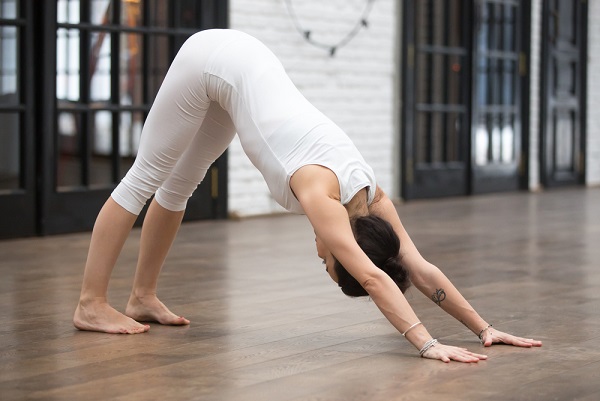
Steps of Adho Mukha Svanasana:
- Start in Table-Top Position: Balance your body on your knees and wrists, creating a stable base.
- Lift Knees: Exhale and gently lift your knees upwards while keeping your toes grounded.
- Stretch Arms Forward: Tilt your upper body forward, keeping your palms facing inward and aligned with your shoulders.
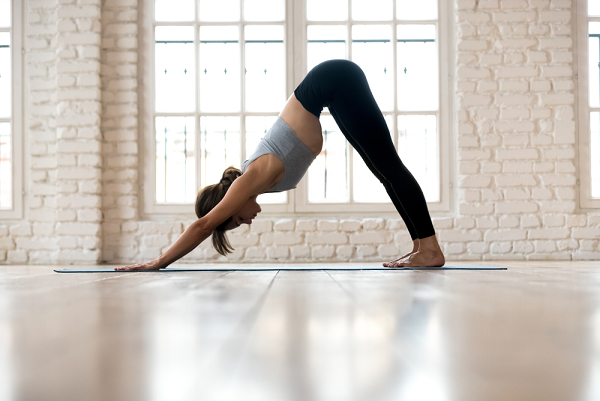
- Form the inverted V: Lift your knees as high as possible, forming an inverted V shape. Maintain a slight inward curve in your back and keep your head and neck aligned.
- Stretch Tailbone: Push your tailbone upwards to stretch your back and calves. Hold the pose for 15-20 breaths.
- Return to Table-Top: Exhale and gently lower your knees to return to the starting position. Repeat up to 8 times.
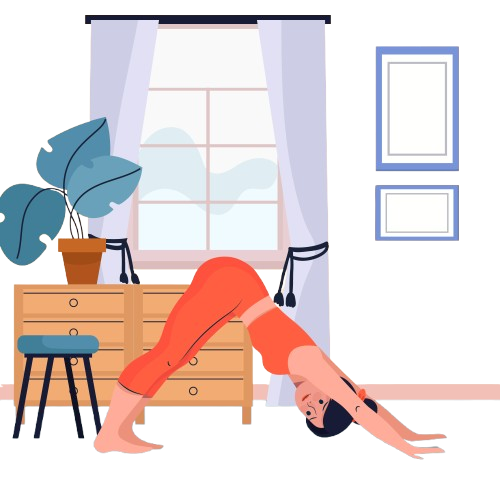
Follow-Up Poses: After completing adho mukha asana, you can practice Uttanasana (Forward Bend Pose) or Sarvangasana (Shoulder Stand Pose). Rest for up to 20 seconds before transitioning to other postures.
Also Read – Top 7 Health Benefits of Uttanasana (Standing Forward Bend Pose)
Modifications and Props
Use the following props and modifications to practice Adho Mukha Svanasana effectively:
- Yoga Bolster: Place a bolster under your head to release neck tension.
- Straps: Secure a strap around your arms above the elbows to enhance inward rotation.
- Blocks: Position a block between your inner thighs to learn inward rotation.
Once comfortable, you can explore variations like the Three-Legged Dog Pose or alternate leg bending to increase the challenge.
Precautions and Contraindications:
- Warm up your arms, wrists, and calf muscles before performing this pose.
- Avoid this pose if you have wrist, foot, shoulder, or back injuries.
- Practice on an empty stomach, allowing a 2-3 hour gap after meals.
- Skip this pose if you have cardiac issues or stomach disorders.
- Keep your palms facing inward for balance and precision.
Benefits of Adho Mukha Svanasana
Physical Benefits:
- Stretches hamstrings, calves, spine, and shoulders.
- Strengthens arms and wrists.
- Alleviates pain in the balls of the feet and helps with calcaneal spurs.
Mental Benefits:
- Centers the brain, neutralizes negative effects, and fosters peace.
- Calms the mind, reduces mild depression, and enhances focus.
Practice the Downward Facing Dog Pose regularly to experience its remarkable benefits and deepen your yoga journey.
Conclusion
Adho Mukha Svanasana, or the Downward Facing Dog Pose, is more than just a fundamental yoga posture—it’s a gateway to enhancing physical and mental well-being. By incorporating this pose into your daily practice, you can experience a revitalizing boost of energy, improved flexibility, and mental clarity. Whether you’re a beginner or an advanced practitioner, this asana offers numerous benefits that can enrich your yoga journey.
For those looking to deepen their practice and gain a comprehensive understanding of yoga, our 200 Hour Yoga Teacher Training India, 300 Hours Yoga Teacher Training India, and 500-hour Yoga Teacher Training in India provide extensive training and insights.
FAQ
Q1: How do I do Downward-Facing Dog correctly?
Ans.: Place your hands and feet on the mat, lift your hips up, straighten your arms and legs as much as comfortable, and form an inverted “V” shape.
Q2: What muscles does Downward-Facing Dog stretch?
Ans.: It mainly stretches the hamstrings, calves, spine, shoulders, and arms.
Q3: Can beginners do Downward-Facing Dog?
Ans.: Yes, it’s suitable for beginners. You can modify the pose by bending your knees or using props.
Q4: How long should I hold Downward-Facing Dog?
Ans.: Start with 30 seconds to 1 minute and gradually increase as you get comfortable.
Q5: What are the benefits of doing Downward-Facing Dog regularly?
Ans.: It helps relieve tension, improve flexibility, strengthen the upper body, enhance circulation, and calm the mind.

Lead Teacher in Yoga Philosophy, Pranayama, Meditation, Kundalini and Therapeutic Applications of Yoga
Born into a traditional spiritual home, Krishna spent over a decade climbing the corporate ladder at Capgemini and Morgan Stanley worldwide; before quitting them to explore the purpose of life. He set forth on a spiritual quest, Learning and Experiencing Yoga with Great Yogis and Spiritual Masters of the Modern World. Krishna's teachings comprises of the ancient practices of yoga through modern scientific reasoning. He specializes in Yoga Philosophy, Pranayama, Meditation, Kundalini and Therapeutic Applications of Yoga. Connect with your true nature and experience the mystical dimensions of yoga in conversation with Krishna.
View Instagram Profile View Linkedin Profile