 +91 9131509957
 info@rishikulyogshala.org




Yoga For Runners: 10 Best Yoga Poses For Runners
Yoga for Runners
Yoga and running can form a cooperative partnership, complementing each other in your fitness journey. While running focuses on repetitive movements, yoga emphasizes expanding your range of motion. Practicing yoga and running together creates a holistic approach to fitness that can benefit you in several ways.
At Rishikul Yogashala, we understand the unique needs of runners and the transformative power of yoga. We have compiled a list of the best yoga poses for runners that will enhance your running performance. Let yoga be the yin to your running yang, nurturing your body, soothing your mind, and elevating your running experience to new heights.
Benefits of Yoga for Runners
Running offers numerous physical and mental benefits but can also take a toll on your body, leading to muscle tightness, imbalances, and even injuries. That’s where yoga comes in. Yoga is the perfect counterpart to your running routine, providing balance and enhancing your overall running performance. Let’s dive into the benefits of yoga for runners:
- Increased Flexibility and Range of Motion: Yoga for runners improves flexibility and joint mobility, reducing the risk of muscle tightness and imbalances. When yoga and running are practiced together, it enhances running performance and lowers the chance of injuries.
- Improved Strength and Stability: Yoga strengthens major muscle groups and stabilizes muscles, enhancing overall strength and stability. This supports proper running form, reduces the risk of injuries, and promotes better posture.
- Enhanced Breathing and Oxygen Intake: Yoga incorporates deep breathing techniques that increase lung capacity and oxygen intake. This improves endurance, helps runners breathe efficiently during runs, and regulates energy expenditure.
- Mental Focus and Clarity: Yoga cultivates mindfulness and mental focus, aiding runners in staying present and overcoming mental obstacles during runs. The meditative aspects of yoga for runners promote stress reduction and a sense of well-being.
- Injury Prevention and Faster Recovery: Yoga addresses muscular imbalances, promotes body awareness, and reduces the risk of overuse injuries. It also aids in faster recovery by reducing muscle soreness, promoting relaxation, and supporting the body’s healing processes.
10 Best Yoga Poses for Runners
Here is a list of the most effective yoga poses for runners, compiled by Rishikul Yogashala, the best yoga school in Kerala:
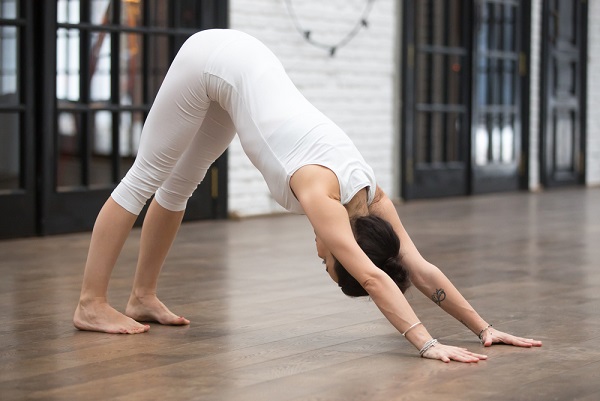
1. Downward-Facing Dog (Adho Mukha Svanasana)
Downward-Facing Dog is an excellent pose for runners as it stretches and strengthens multiple muscle groups simultaneously. It stretches the calves, hamstrings, and Achilles tendons, which tend to get tight from running. This pose also opens up the shoulders, chest, and back, improving posture and relieving tension. It helps yoga for runners helps improve their overall flexibility, prevents injuries, and enhances their running performance.
How to Do Downward-Facing Dog Pose:
- Start on your hands and knees.
- Spread your fingers wide and push your palms into the mat.
- Lift your knees off the ground and straighten your legs to form an inverted “V” shape with your body.
- Press your heels toward the ground and lengthen your spine, relaxing your head and neck.
- Hold the pose for several breaths, focusing on deepening your stretch and maintaining stability.
2. Standing Forward Bend (Uttanasana)
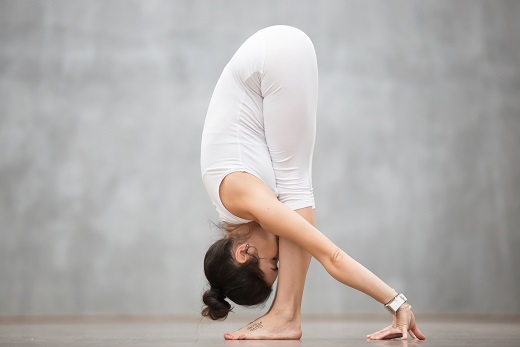
Standing Forward Bend is a rejuvenating pose that targets the hamstrings, calves, and lower back. Runners often experience tightness in these areas, and this pose provides a deep stretch, releasing tension and increasing flexibility. Uttanasana also calms the mind, relieving stress and anxiety. By allowing the head to hang, this pose promotes relaxation and encourages blood flow to the brain, improving mental clarity and focus.
How to Do a Standing Forward Bend:
- Stand with your feet hip-width apart.
- Exhale and fold forward from your hips, keeping your legs straight.
- Place your hands on the ground or hold onto your elbows.
- Allow your head and neck to relax, and let gravity pull your torso toward your thighs.
- Maintain the pose for a few breaths, feeling the stretch in the back of your legs.
Read More: Top 7 Health Benefits of Uttanasana (Standing Forward Bend Pose)
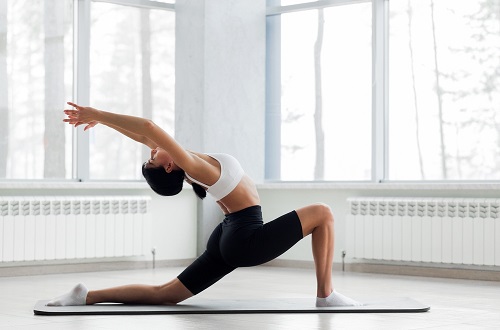
3. Low Lunge (Anjaneyasana)
Low Lunge is a dynamic pose that stretches the hip flexors, quadriceps, and hamstrings. It also engages the core muscles and promotes balance and stability. Runners often have tight hip flexors due to the repetitive motion of running, and Low Lunge helps to open up these muscles and release tension. This pose also activates the glutes, which are essential for maintaining proper running form and preventing injuries.
How to Do Low Lunge:
- Begin in a high plank position.
- Step your right foot forward between your hands, keeping your knee directly above your ankle.
- Place the top of your left foot on the mat and lower your left knee to the ground.
- Engage your core and lift your torso upright, extending your arms overhead.
4. Bridge Pose (Setu Bandhasana)
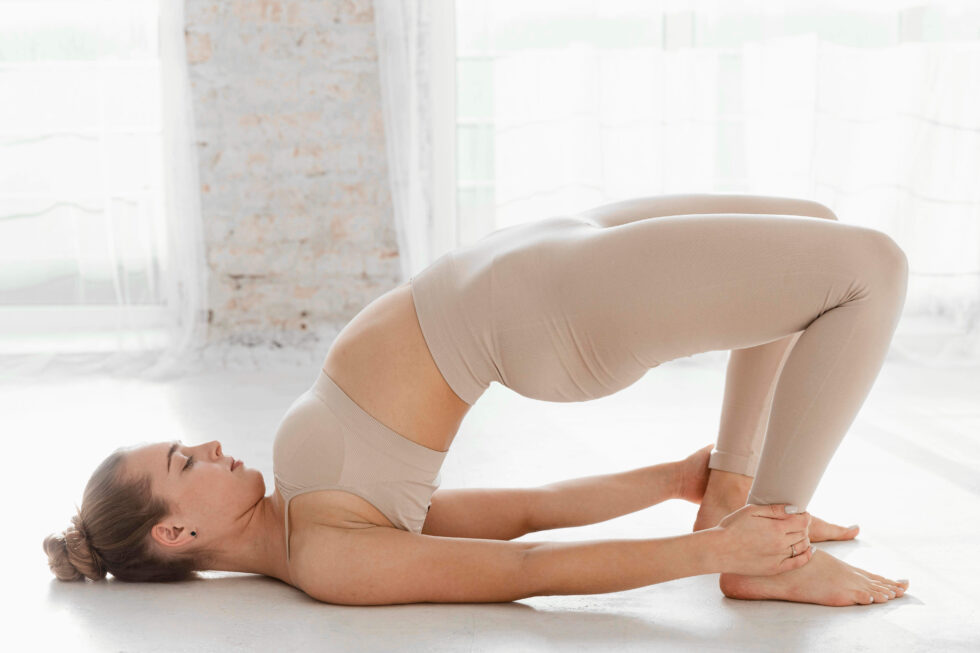
Bridge Pose is a backbend that supports the glutes, hamstrings, and lower back muscles. It also opens up the chest and shoulders, counteracting the hunched posture that can occur from prolonged running. Regular practice of Bridge Pose can help runners build strength in the posterior chain, enhance their running efficiency, and prevent common running-related injuries.
How to Do Bridge Pose:
- Lie on your back with your knees bent and feet hip-width apart, flat on the ground.
- Press your feet into the mat, engage your glutes, and lift your hips off the ground.
- Place your fingers together beneath you and gently roll your shoulders backward to expand and open up your chest area.
- Keep your thighs parallel to each other and lengthen your tailbone toward your knees.
- Hold the pose for several breaths, feeling the stretch in your chest, hips, and thighs.
Also Read: Bridge Pose (Setu Bandhasana) Benefits: Strengthen, Stretch, and Relax Your Body
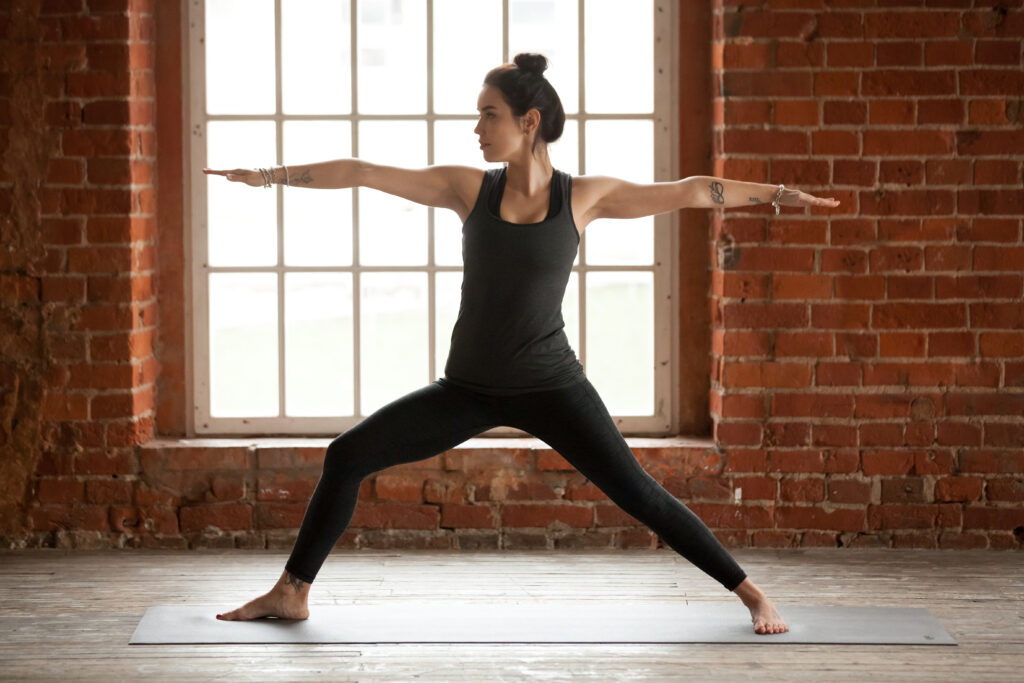
5. Warrior II (Virabhadrasana II)
Warrior II is a powerful pose that targets the hips, thighs, and shoulders. It builds strength and stability in the lower body while improving overall body awareness. This pose stretches the hip flexors, which can become tight from running, and strengthens the quadriceps and glutes.
How to Do Warrior II Pose:
- Start in a standing position with your feet separated.
- Turn your right foot out 90 degrees and align your heel with the arch of your left foot.
- Bend your right knee directly over your ankle and extend your arms to the sides. Gaze over your right fingertips and engage your core muscles.
- Hold the pose for several breaths, feeling the strength and stability in your legs and the stretch in your hips.
- Repeat on the other side.
Also Read: Top 10 Excellent Benefits of Virabhadrasana (Warrior Pose)
6. Triangle Pose (Trikonasana)
Triangle Pose is a standing pose that provides a deep stretch for the hamstrings, hips, and side body. It also improves harmony and strengthens the legs and core muscles. Yoga for Runners often experience tightness in the hamstrings and hips, and the Triangle Pose helps to lengthen and release tension in these areas. This pose also opens the chest and shoulders, promoting better breathing and lung capacity during runs.
How to Do Triangle Pose:
- Stand with your feet wide apart, one foot facing forward and the other foot turned out to the side.
- Extend your arms out to the sides, parallel to the ground.
- Hinge at your hip and reach forward with your forward hand, placing it on your shin, ankle, or the floor.
- Extend your other arm toward the ceiling, keeping your gaze directed upward.
- Make sure to keep a straight line from your extended arm to your back foot.
- Hold the pose for several breaths, feeling the stretch in your legs and sides of the body.

Also Read: Top 7 Health benefits of Trikonasana (Triangle Pose)
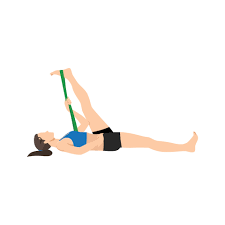
7. Reclining Hand-to-Big-Toe Pose (Supta Padangusthasana)
Reclining Hand-to-Big-Toe Pose is a restorative pose that stretches the hamstrings and calves. It also helps to relieve tightness in the lower back and hips. This pose is particularly beneficial for runners as it allows for a deep and passive stretch without putting excessive strain on the muscles.
How to Do Reclining Hand-to-Big-Toe Pose:
- Lie on your back with your legs extended.
- Bend your right knee and bring your right thigh toward your chest.
- Wrap a strap or towel around the arch of your right foot and grasp the ends with your hands.
- Extend your right leg upward, keeping it straight and the foot flexed.
- Relax your shoulders and neck, and breathe deeply.
- Hold the pose for several breaths, feeling the stretch in your hamstrings and calf muscles.
- Repeat on the other side.
Also Read: Supta Padangusthasana: Five Health Benefits of Practicing It
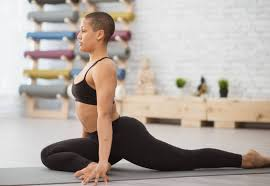
8. Pigeon Pose (Eka Pada Rajakapotasana)
Pigeon Pose is a deep hip opener that targets the glutes, hips, and lower back. It releases tension in the hip flexors and piriformis muscles, which can become tight and imbalanced from running. Pigeon Pose also helps to increase hip mobility and alleviate any discomfort or tightness in the hips and lower back.
How to Do Pigeon Pose:
- Start in a high plank position.
- Bring your right knee forward and place it behind your right wrist.
- Extend your left leg straight back, keeping your hips squared.
- Slowly lower your upper body toward the ground, resting on your forearms or placing a block under your chest for support.
- Breathe deeply and relax into the pose, feeling the stretch in your hip and glute muscles.
- Hold the pose for several breaths, then repeat on the other side.
Also Read: 7 Incredible Health Benefits of Half Pigeon Pose Yoga (Ardha Kapotasana)
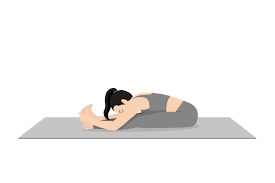
9. Seated Forward Bend (Paschimottanasana)
Seated Forward Bend is a calming yoga pose that stretches the entire back body, including the hamstrings, calves, and spine. It also helps to release tension in the shoulders and neck. This pose is beneficial for runners as it lengthens the muscles of the back body, improving overall flexibility and reducing the risk of muscle imbalances.
How to Do Seated Forward Bend:
- Sit on the ground with your legs extended in front of you.
- Inhale and lengthen your spine, then exhale and fold forward from your hips.
- Reach for your feet, ankles, or shins, depending on your flexibility.
- Keep your back straight and avoid rounding your spine.
- Breathe deeply and relax into the stretch, feeling the lengthening in your hamstrings and spine.
- Hold the pose for several breaths, gradually deepening the stretch.
Also Read: Top 7 Health Benefits of Paschimottanasana (Seated Forward Bend Pose)
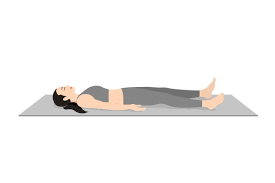
10. Corpse Pose (Savasana)
Corpse Pose is a deeply relaxing pose that allows the body and mind to unwind fully and integrate the benefits of the yoga practice. It involves lying on the back, with the arms and legs relaxed, and focusing on conscious relaxation and deep breathing. Savasana helps to reduce physical and mental tension, promoting a state of deep relaxation and rejuvenation.
How to Do Corpse Pose:
- Lie on your back with your legs extended and arms relaxed. Close your eyes and take slow, deep breaths.
- Allow your body to relax, releasing any tension or tightness fully.
- Focus on letting go of any thoughts or distractions, entering a state of complete relaxation.
- Remain in this pose for several minutes, enjoying the sense of calm and rejuvenation.
Conclusion
Yoga and running complement each other perfectly. While running builds endurance and cardiovascular strength, yoga supports flexibility, balance, controlled breathing, and faster recovery. Regular yoga practice helps runners reduce muscle tightness, improve posture, strengthen the core, and lower the risk of common running injuries. By developing body awareness and mindful movement, yoga allows runners to perform better and enjoy a more sustainable and injury-free running routine.
For runners who want to take their practice to a deeper level, Rishikul Yogshala offers an authentic 200 Hour Yoga Teacher Training in India that focuses on traditional yoga education along with modern anatomical understanding. Training at Rishikul Yogshala helps runners learn correct alignment, breath control, injury prevention, and recovery techniques that support long-term athletic performance. Whether your goal is to improve your running, deepen your yoga practice, or become a certified yoga teacher, this training provides a strong foundation for a balanced and healthy lifestyle.

MEDITATION, INSPIRATIONAL AND SPIRITUAL GUIDE
Yogi Gangesha Chaitanya is a master of Yoga Philosophy, Meditation, Pranayama, and Spiritual Guidance, trained under Swami Rama and renowned institutions like the Himalayan Tradition and Sri Aurobindo Ashram. With expertise in Kundalini Yoga and meditation, he mentors students in 200-hour and 300-hour Yoga Teacher Training programs, guiding them toward inner awareness, spiritual growth, and a deeper understanding of yoga.
View Instagram Profile

- What Are Healing Frequencies? Understanding the Power of Sound and Vibration
- Solar Plexus Chakra: What It Does, Where It Is, and How to Balance It?

- Om Shanti Mantra: Meaning, History & Its Deep Connection With Yoga
- Ujjayi Pranayama: Steps, Benefits & How to Practice

- Is 200 Hour Yoga Teacher Training Course Enough to Build a Successful Teaching Career?