 +91 9131509957
  info@rishikulyogshala.org




Top 7 Health Benefits of Kandharasana (Shoulder Pose)
Some activities make your body stronger, and some calm your mind, but very few do both in perfect harmony. Kandharasana is a perfect example of this. This gentle, supportive position helps your body open up from the inside, making room for tension to hide. This article will discuss the top seven health benefits of Kandharasana, which help your health in the long run, improve how your body works, and keep your emotions in check. As you read, you’ll find out why yogis think this is one of the best backbends and how it can improve your daily practice in simple, meaningful ways.
Practice of Kandharasana: Shoulder Pose
Kandharasana, also known as the Shoulder Pose, is a gentle backbend that stretches the spine, opens the chest, and strengthens the shoulders. This heart-opening posture not only improves flexibility and posture but also helps calm the mind, release tension, and boost overall energy. Whether you are a beginner or an experienced practitioner, Kandharasana is a powerful asana that nurtures both the body and mind.
Our body is a miraculous machine, with each organ playing a crucial role in maintaining our health. However, sometimes our actions and negligence can compromise the functioning of these organs, leading to a reduced quality of life.
Kandharasana, or Shoulder Pose, serves as a natural remedy for an inefficient internal system. As a backward-bending yoga posture, Kandharasana is highly beneficial for expanding the chest, opening the breathing passages, stretching various body areas, and promoting overall healing. The benefits of Shoulder Pose are particularly significant for women.
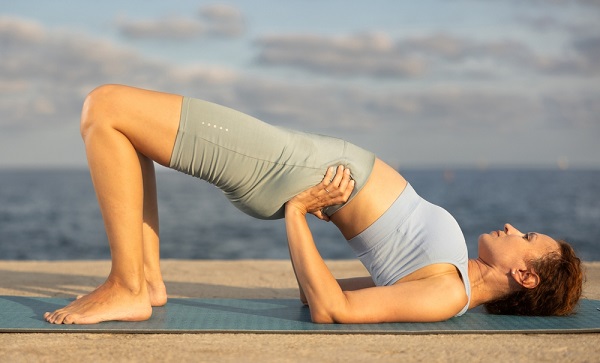
Instructions for Performing Kandharasana
- Starting Position: Lie on your back with your legs stretched out and arms by your side.
- Prepare: Bend your knees and place your feet flat on the ground.
- Grip: Extend your arms to grasp your ankles with your palms. Ensure the grip is firm.
- Position: Pull your feet toward your hips, keeping within your limits.
- Lift: Inhale, retain your breath, lift your hips higher, and arch your back upwards.
- Support: Your feet and shoulders should rest on the mat, supporting your body weight on your shoulders, neck, head, arms, and feet.
- Hold: Maintain this position for 20 seconds.
- Release: Lower your hips and back to the ground, extend your legs, release your ankles, rest your arms by your side, and relax in the supine position.
Contraindications for Shoulder Pose
- Pregnancy: Avoid this pose.
- Peptic or Duodenal Ulcers: Do not practice until the condition improves.
- Knee Injuries: Consult a doctor before practicing or avoid the pose entirely.
- Abdominal Hernia: Avoid this pose.
Kandharasana Practicing Tips
- Perform Kandhar-asana either before or after a forward bend posture.
- It serves as a preparatory pose for Chakrasana (Wheel Pose).
- Ideally, practice 3 rounds of Shoulder Pose. You may extend this based on your body strength and limits.
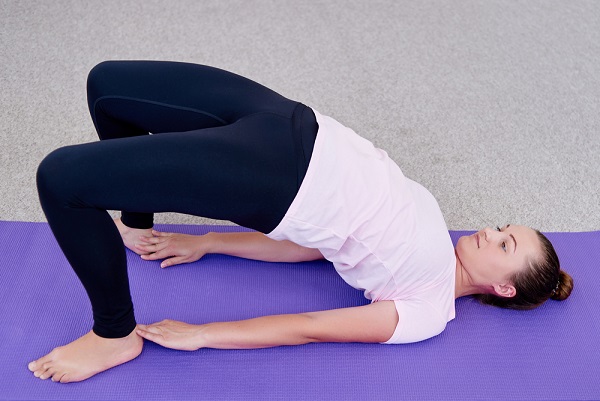
7 Incredible Health Benefits of Kandharasana (कंधरासन)
Lets us discuss some popular kandharasana benefits:
- Strengthens Shoulders: Kandharasana helps correct rounded shoulders and strengthens them by bearing the body’s weight in the pose.
- Heals Back Problems: Arching the back upwards during the pose can alleviate intervertebral disc issues and backache, leading to long-term relief when practiced regularly.
- Good for Female Health: The pose strengthens the uterus, potentially reducing the risk of miscarriage and relieving menstrual discomfort. Women can benefit from this pose before and during pregnancy.
- Tones Abdomen Organs: Kandhar-asana tones the digestive organs, kidneys, liver, spleen, pancreas, and gallbladder, enhancing their function and contributing to well-defined abs.
- Powers Up Lungs: This pose facilitates chest and lung expansion, improving breathing and oxygen intake, which benefits overall lung health.
- Centers Solar Plexus: Kandhar-asana yoga centers the Manipura Chakra, boosting self-esteem, confidence, and willpower.
- Improves Mental Health: In addition to its physical benefits, the Shoulder Pose supports mental and emotional well-being.
Also Read – 5 Yoga Poses for Tight Shoulders
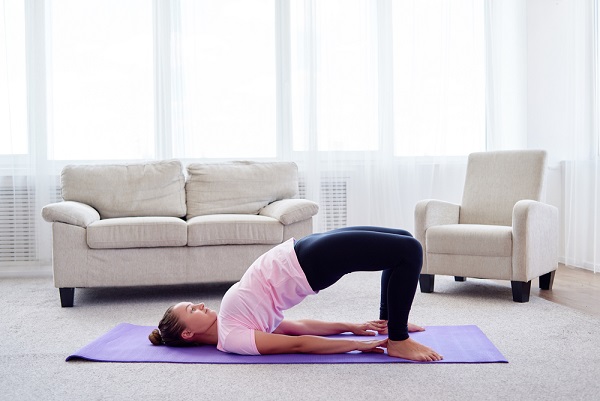
Emotional & Energetic Benefits of Kandharasana
While Kandharasana is widely loved for its physical benefits, this heart-opening posture also deeply nurtures your emotional and energetic well-being.
- Reduces Stress & Anxiety: The gentle backward bend helps release stored tension from the upper back, shoulders, and chest. This creates a calming effect on the nervous system and helps reduce stress, anxiety, and emotional fatigue.
- Improves Mental Focus & Clarity: As the body opens, your breath becomes deeper and more rhythmic. This naturally boosts concentration, stabilizes emotions, and clears mental fog.
- Boosts Energy by Stimulating the Thyroid: The neck position in Kandhar-asana activates the thyroid gland, helping balance hormones and improve energy levels. It’s a great pose if you often feel tired or low on motivation.
- Opens the Heart Chakra (Anahata): This pose expands the chest area, helping dissolve emotional blockages, enhance compassion, and promote a greater sense of inner acceptance.
- Supports Healthy Energy Flow (Prana): Kandhar-asana creates space along the spine, allowing prana — the vital life force — to move more freely. This leads to improved vitality, inner balance, and a steadier mind.
Also Read:
Conclusion
Kandharasana is more than just a backbend — it is a gentle, powerful posture that nurtures your body, mind, and energy. With regular practice, you can experience better posture, improved flexibility, balanced hormones, and a calmer state of mind. Whether you are a beginner or an experienced practitioner, this heart-opening pose can become a valuable part of your daily yoga routine. Start slowly, listen to your body, and allow this beautiful asana to bring more strength, openness, and balance into your life.
By understanding poses like Kandharasana on a deeper level, practitioners can truly experience how yoga supports holistic well-being. At Rishikul Yogshala, we emphasize this integrated approach in our 200 Hour Yoga Teacher Training in India, where students not only learn how to practice such asanas safely but also explore their therapeutic, anatomical, and energetic dimensions. This helps you understand why a posture works, how it affects the body and mind, and how to teach it effectively to others. By connecting traditional asana practice with clear teaching methodologies, our training ensures that transformative poses like Kandhar-asana become part of a meaningful, knowledgeable, and lifelong yoga journey.
FAQ – Kandharasana
Q1. Is Kandharasana suitable for beginners?
Ans. Yes, Kandharasana is suitable for beginners when practiced gently and with correct alignment.
Q2. How long should I hold Kandhar-asana?
Ans. You can start by holding the pose for 10–20 seconds and gradually increase the duration as you become more comfortable.
Q3. How many rounds should I practice?
Ans. Practicing 2–3 rounds is ideal, with a short rest between each round.
Q4. Who should avoid this pose?
Ans. People with neck injuries, severe back pain, abdominal hernia, or recent surgeries should avoid this pose. Pregnant women should practice only with guidance.
Q5. What is the best time to practice Kandharasana?
Ans. Morning on an empty stomach is best, or practice at least 4–5 hours after a meal.
Q6. What are the best counterposes after Kandharasana?
Ans. Forward-bending poses like Paschimottanasana or a simple knees-to-chest pose work well as counterposes.
Q7. Can I use props if I find the pose difficult?
Ans. Yes, you can use a yoga strap, bolster, or blocks to support your posture and maintain proper alignment.
Q8. What benefits can regular practice bring?
Ans. With consistent practice, you may experience better posture, reduced back stiffness, improved breathing, higher energy levels, and better emotional balance.
Last Updated On: 19-11-2025

Lead Teacher in Yoga Philosophy, Pranayama, Meditation, Kundalini and Therapeutic Applications of Yoga
Born into a traditional spiritual home, Krishna spent over a decade climbing the corporate ladder at Capgemini and Morgan Stanley worldwide; before quitting them to explore the purpose of life. He set forth on a spiritual quest, Learning and Experiencing Yoga with Great Yogis and Spiritual Masters of the Modern World. Krishna's teachings comprises of the ancient practices of yoga through modern scientific reasoning. He specializes in Yoga Philosophy, Pranayama, Meditation, Kundalini and Therapeutic Applications of Yoga. Connect with your true nature and experience the mystical dimensions of yoga in conversation with Krishna.
View Instagram Profile View Linkedin Profile